
Where is the world's largest message in a bottle?
And is it still filled with soda?

When I first read about the world’s largest message in a bottle, I was like, “Um, I feel like that’s not really the point of a message in a bottle? Sorry, is it supposed to be big? No? Okay.”
When I first told my friend Kelly about the world’s largest message in a bottle, she was like, “Wait, the bottle is big or the message is big?” and I said, “Both, actually” and she said, “What?”
When I first told this Moroccan stranger on Omegle about the world’s largest message in a bottle, she said, “U want it ?” and I said “i do actually” and then we had a really nice conversation about how she’s leaving soon for university to study biology so she can open a bloodwork lab in her hometown.
The point is that everyone is very confused about the world’s largest message in a bottle, probably including you now. And that’s a very appropriate reaction, because this thing is so weird.
This thing falls perfectly into the extremely specific category of “who in the world decided this needs to exist” that fuels this newsletter. Without freaks like the guy who invented this, there would simply be no Rabbit Cavern and your emails would be so much easier to read.
In this case, the freak who invented it is Norwegian soda CEO Joakim Sande and his reason for it existing is “because it was ‘heartbreaking’ that only Norwegians should get [a] chance to taste what he called ‘the best soda in the world.”
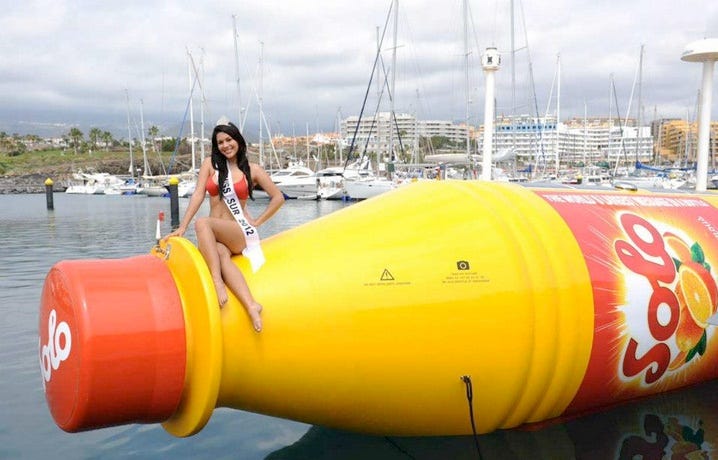
And what better way to share your delicious Norwegian soda with the world than to build a 2.5-ton fiberglass soda bottle and huck it into the Atlantic Ocean?
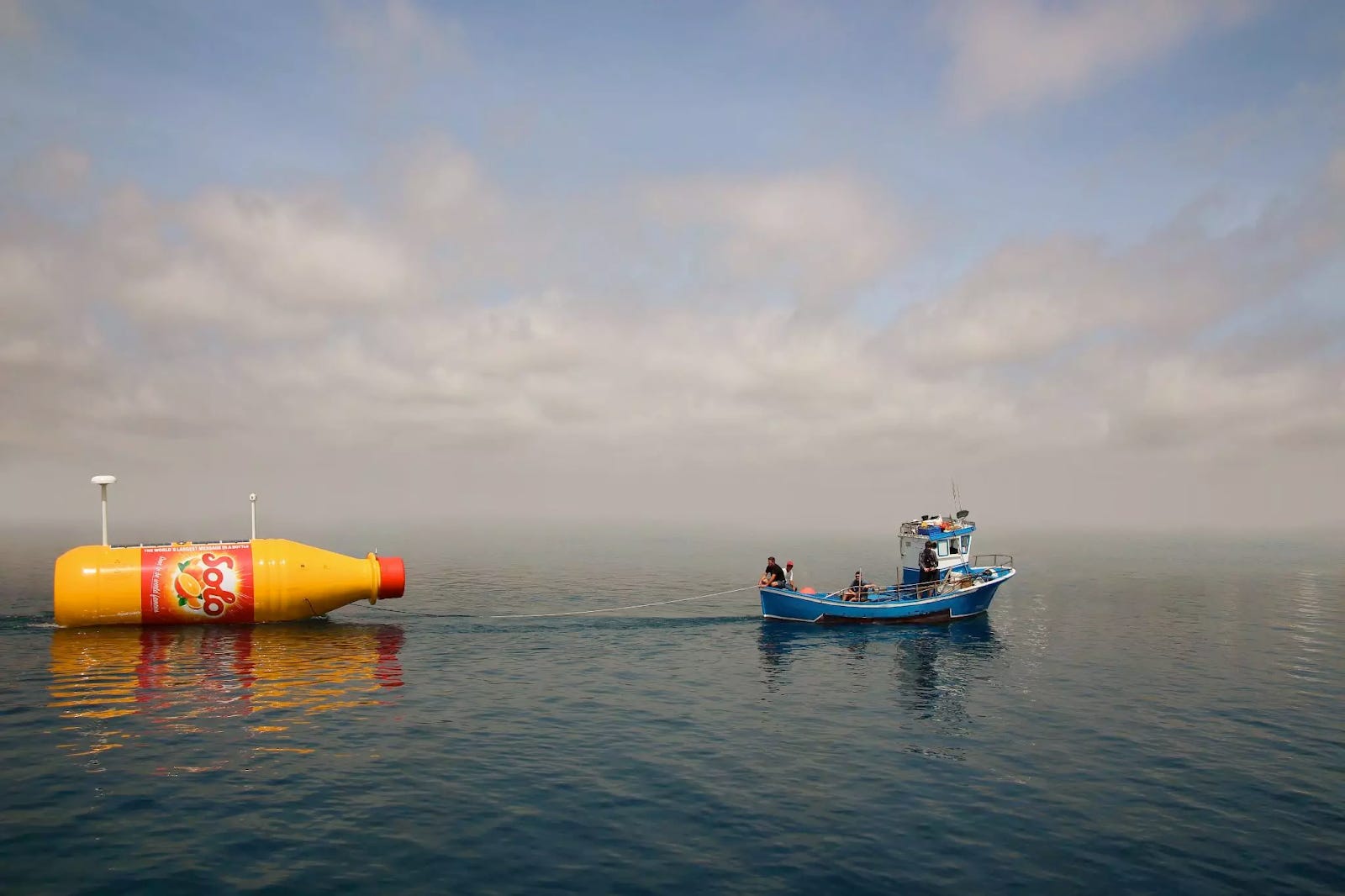
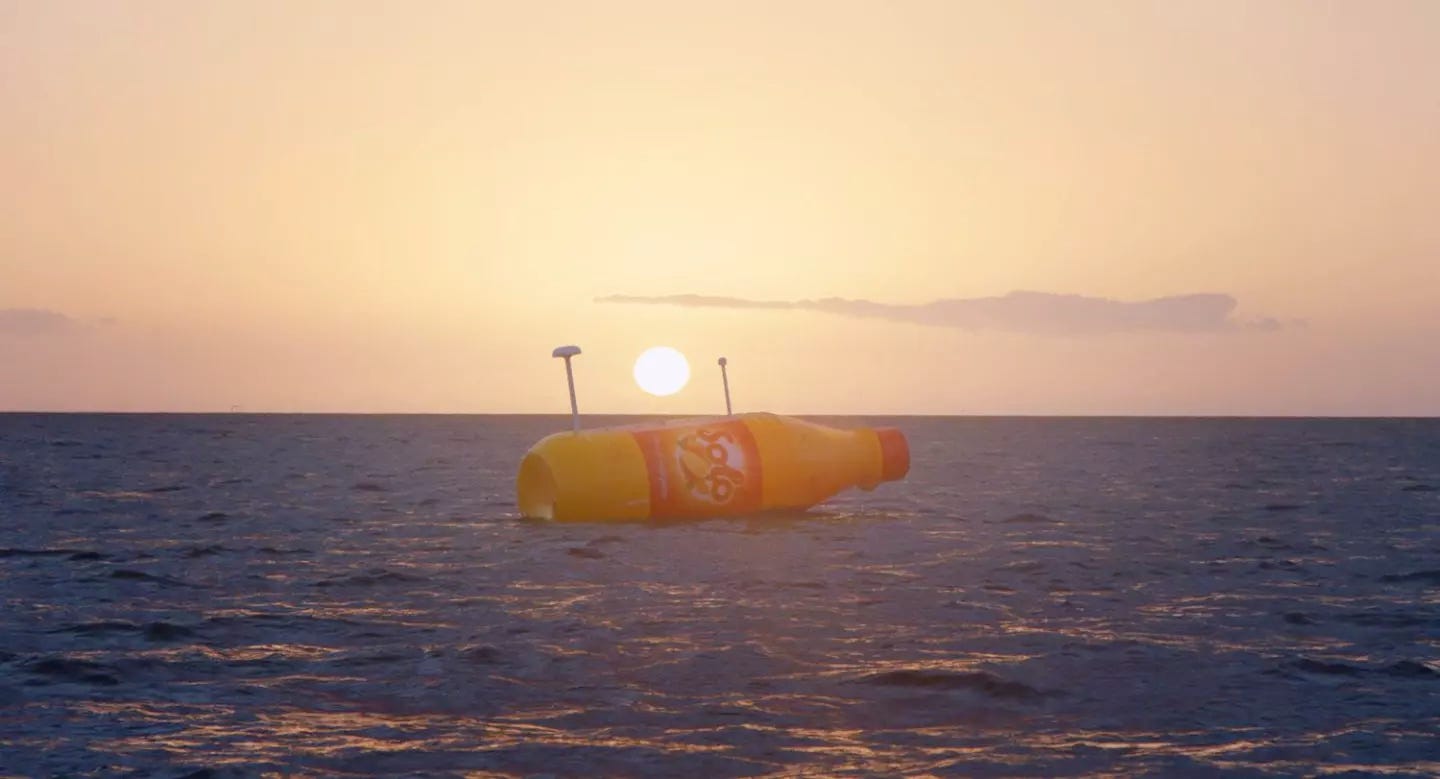
Dear reader, this thing is huge. It’s eight feet tall tipped on its side and as long as the biggest type of U-Haul you’re allowed to rent. They even had to register and insure it as a boat.
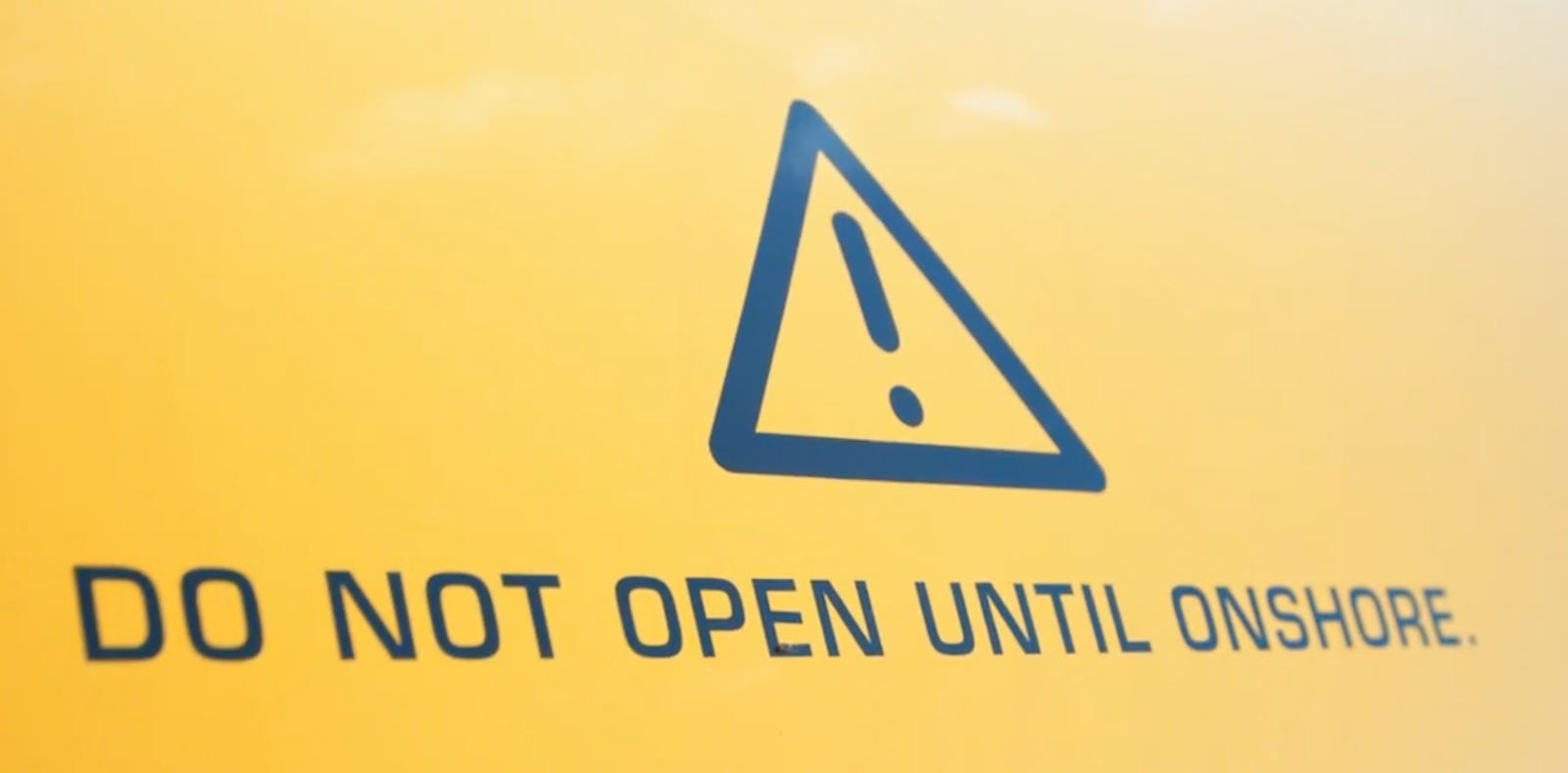
What’s inside? Oh, just a “12 square meter (129 square foot) letter in various languages explaining that whoever finds the giant bottle wins a finder's party in the nearest town and lists a phone number to call.” Also a case of soda. Just the one case of soda. Just one letter that’s the size of a small bedroom (or this woman’s entire apartment) and a single case of soda.
Solo, the Norwegian soda company behind this project, was really excited about it. They made a fancy promo video and set up a website where users could track the bottle and guess its eventual landing spot, “with a correct guess winning one real bottle of Solo for each nautical mile the oversized one travels.”
The giant soda bottle was outfitted with navigation lights and a bunch of fancy tracking equipment, as well as cameras that shared a 360-degree view to Twitter every eight hours and a 140-liter (37-gallon) water tank to clean the camera lenses. Oh, and solar panels to power everything!
And yet within five months of being released into the ocean, the bottle was reported to be “lost at sea” after its satellite connection went down. (It’s my understanding that being “lost at sea” is the entire point of a message in a bottle, but what do I know)
Anyway, I’m sure the Norwegians were all very stressed out about this. They were probably thinking about how all the fancy equipment that was supposed to prevent ships from colliding with the bottle probably wasn’t working anymore.
Imagine you’re out there in the ocean sailing around the world by yourself and you’re rocked awake in the middle of the night by a U-Haul-sized soda bottle ramming into your boat. Imagine drowning to death after being shipwrecked by the giant Norwegian soda bottle.
When the bottle went offline, our Norwegian soda CEO cited “heavy sun storms” as the cause, but he soon learned from the Venezuelan Coast Guard that the real cause was “pirates.”
Specifically, “notorious pirates somewhere east of Barbados.” These notorious pirates cut a big hole in the side of the bottle to steal all the electronics and batteries onboard. They also drank the entire case of soda (lol)
The notorious pirate incident occurred in 2013 and I haven’t been able to find any more recent updates. I messaged the company on Facebook but all I received in response was this cryptic gibberish message:
I managed to find the CEO’s email and personal phone number on the Internet but I haven’t worked up the courage to bother him yet.
Perhaps the most likely outcome, considering the giant hole in the side of the bottle, is that it sank (if it wasn’t scuttled by the Venezuelan Coast Guard in the first place).
But for all we know, the big soda bottle could still be floating out there somewhere, just waiting to either wash up on a beach or ram a sailboat and kill someone. Probably one of those two outcomes is most likely.
But wait, couldn’t we just use our knowledge of the ocean’s currents to figure out where the bottle should be?
Unfortunately, it’s not that simple. But interestingly, messages in bottles were a big part of how we learned about ocean currents in the first place.
For hundreds of years, scientists have been dropping bottles into the ocean and asking people to let them know where they wash up. Based on that information, we can better understand the direction and speed of currents like the Gulf Stream, which was first charted by Benjamin Franklin and his cousin in 1769.
In 2009, it was estimated that 6,000,000 bottled messages had been released since the mid-1900s, including 500,000 from oceanographers.
Only about 3% of bottles are ever recovered, so to increase the odds of gaining meaningful insights rather than messages in a bottle simply being the most convoluted way possible to avoid recycling, scientists release bottles in large numbers – hundreds or thousands at a time.
Nowadays we have fancier equipment that can give us better data than literal garbage in the ocean, but once upon a time, hucking a bottle into the sea was actually a great way to do important science.
Most of the time, when thousands of bottles are dumped into the ocean, it’s for these previously stated science reasons, but occasionally, it is also done to sell beer.
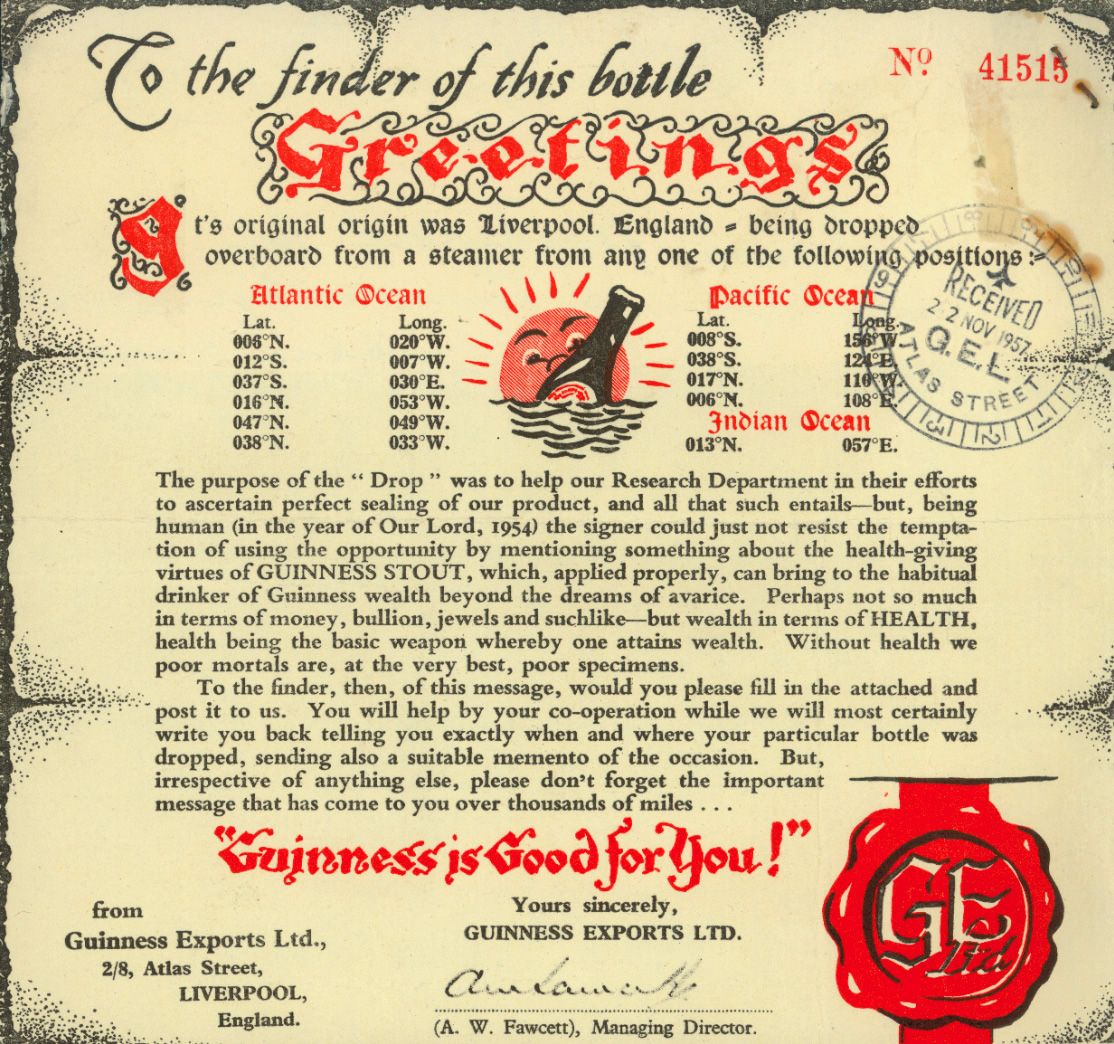
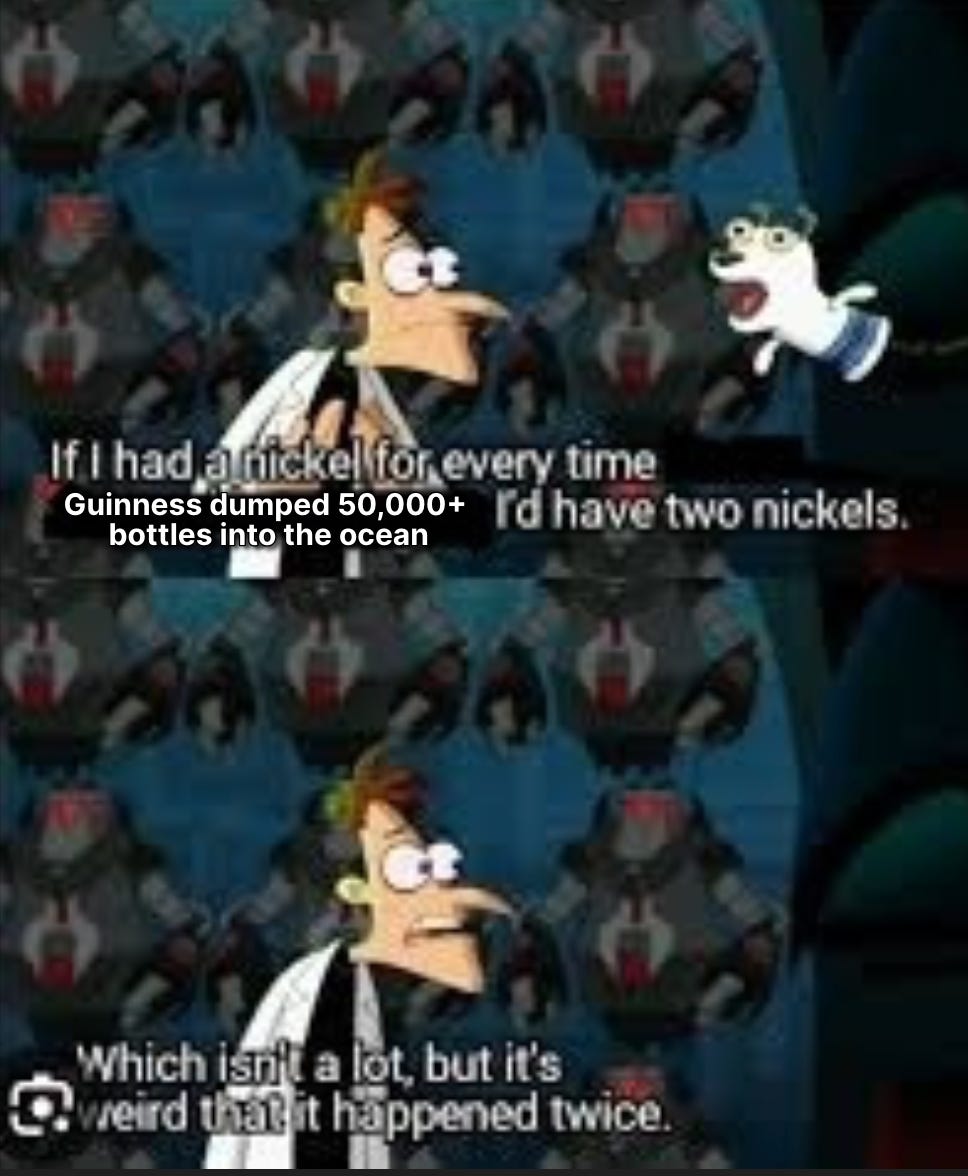
In 1954, Guinness took 50,000 of their best bottles and instead of filling them with very dark beer, they filled them with pieces of paper telling the finder about “the health-giving virtues of GUINNESS STOUT,” among other things.
Guinness apparently had so much fun throwing thousands of bottles into the ocean that five years later, to celebrate their bicentennial, they said, “You know what would be even better than throwing 50,000 bottles into the ocean? Throwing 150,000 bottles into the ocean.” So they did that.
This second batch of bottles was slightly cooler in that they all contained a message from “the office of King Neptune” in which he explicitly granted Guinness permission to throw a bunch of bottles into his house (the ocean).
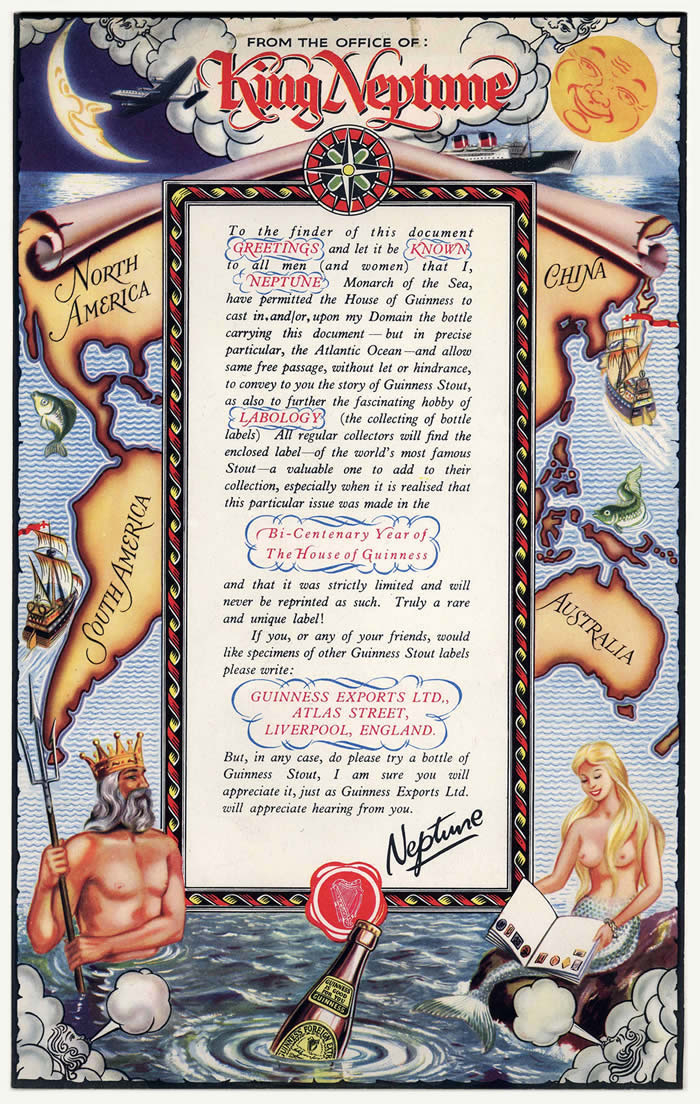
They also contained instructions on how to turn the bottle into a lamp, which I’m sure so many people definitely, totally did, thanks so much Guinness.
The Guinness bottles have been found in California, the Bahamas, South Africa, and also on this one specific beach in the Canadian Arctic with so much frequency that the locals call it “The Beer Bottle Beach.” Thanks Guinness!
This is probably a good time to mention that about 90% of marine debris washes up on less than 10% of the world’s coastlines. You’re more likely to find washed-up ocean stuff on “beaches that jut out perpendicular to the dominant ocean current,” so keep that in mind if you’re in the market for a new Guinness lamp.
Sometimes bottles go on very long journeys before they are found, whether geographically or temporally.
The oldest message in a bottle ever found1 was tossed from a German ship into the Indian Ocean in 1886. It’s thought to have washed up on the Australian coast within a year, and was promptly buried by sand until a woman walking along the beach in 2018 saw it, and “thinking it would be nice for her bookshelf,” picked it up.
The note inside was at first mistaken for a “rolled-up cigarette,” but once the finders realized what they’d found, they took the damp note back home and put it in the oven for a few minutes to dry it out, successfully reenacting that one scene from National Treasure.
Sometimes bottles don’t travel very far at all! In 1971, a ten-year-old girl threw a bottle into Delaware’s Indian River Bay, and 45 years later, it was found on an adjacent beach.
Sometimes messages in bottles are done for a laugh, like that time the New York Times got pranked and printed a story about a fake shipwreck, or that time some French sailors sent out a distress call after they “tragically” ran out of alcohol on their voyage.
Sometimes bottles contain genuine distress calls. In 2005, 88 migrants were rescued after being abandoned at sea by traffickers. They had attached a message in a bottle to the long line of a passing fishing vessel, and were miraculously saved just as their boat was beginning to sink.
On Father’s Day 2019, a family found themselves trapped at the top of a remote 40-foot waterfall, unable to get back down. They sent out a call for help in a plastic Nalgene bottle and were rescued after hikers downriver discovered it and alerted authorities. (The dad was gifted a new water bottle, this time with a love note inside.) (brb crying)
Sometimes messages in bottles are sent just for fun! Works by Charles Dickens and Edgar Allan Poe got everyone really into messages in bottles in the 19th century, and the interest clearly has not died down over time.
In 1956, a Swedish sailor sent out a message in a bottle addressed “To Someone Beautiful and Far Away.” This beautiful and distant someone would end up being a 17-year-old Sicilian girl, and the bottled message began a correspondence between the two that eventually culminated in their marriage two years after the bottle was first sent.
People got so excited about this Swedish man and his child bride that 4,000 people attended their wedding, with many tossing their own bottles into the sea in hopes of finding their own very strange lifelong partnership.
Other times, messages in bottles are sent for decidedly less fun reasons.
A Scottish widower sent out 2,000 messages in bottles in 2017 in hopes of finding female companionship. Although he received interest from 50 women (resulting in the awesome BBC headline “Bottle man lands 50 potential dates”), he also got publicly shamed for littering and formally yelled at by the Scottish Environment Protection Agency.
With regards to the abuse he had received, our bottle Scot said, “The abuse was not very good,” which sounds about right because abuse is rarely known for its quality of being good. Ok send post
He also added: "I am genuinely sorry for upsetting people, but I do not regret what I did."
"I am genuinely sorry for upsetting people, but I do not regret what I did."
-that one Scottish guy and also me, all of the time, constantly
In 1914, a British soldier on his way to the front dropped a message in a bottle into the English Channel, hoping to reach his wife and two-year-old daughter before he arrived on the World War I battlefield. He signed the message, “Ta ta sweet, for the present. Your Hubby,” and was killed two days later.
85 years later, his bottle was found and returned to his daughter, now 86 years old and living in New Zealand.
She said it helped fill a void in her life. "It touches me very deeply to know ... that his passage reached a goal.
"I think he would be very proud it had been delivered. He was a very caring man," she said.
Not surprisingly, messages in bottles are often used as a vessel for people’s final voyages, ashes sent out to sea with a photograph and a note about who this person was and what their life meant to the sender.
One woman who sent her two-year-old grandson’s ashes out to sea said she did it to “set [his] spirit free.” The note read, “I hope his spirit travels the world as we know he is still with us in spirit and forever in our hearts.”
The bottle was eventually found by someone who had recently lost their daughter in a tragic accident, and the two connected over this shared experience of grief.
Discovering messages like these can be a moving experience, especially if the finder has gone through a similar tragedy themselves. Sometimes, it can also be a slightly weird experience, as one man attests: “Walking back I had it all in my pocket and I’m just sitting there like, man, I’m walking around with someone’s cremated body and it just wasn’t what I was planning on doing this morning.”
As some of you can surely relate, spreading someone’s ashes is an incredibly intimate experience. It’s heart-wrenching in a way you might not anticipate, even after enduring the challenge of this person’s loss in the first place.
It’s a sacred act of committing their physical form to somewhere for eternity. It’s saying, based on everything you were in life, I think you’d like to be here in death. It’s saying, you belong here now.
When you spread ashes in water, and you watch them slowly disappear beneath the surface, it only takes a few seconds before it’s impossible to distinguish between the ashes and all the other tiny pieces of dust floating around, glinting in the sun. And I think that’s the point. In releasing someone’s ashes, you’re accepting the idea that when they die, they become part of everything. Their physical form disappears beneath the waves but the essence of who they are stays with you forever. They don’t need a physical form to be part of your life. They are all around you, always.
In the same way, I think when you drop a bottle of ashes into the ocean, as you see the bottle bob away and rise and fall with the waves, you’re accepting that they’re everywhere, part of something so much bigger than themselves.
We’ve seen from messages in a bottle that objects can ride ocean currents all the way around the globe. And so when you drop a bottle of someone’s ashes into the ocean, you’re accepting that you’ll never really know where they are, but that they could be anywhere.
In this sense, the “here” in “you belong here now” is everywhere. This person meant so much to you in life that they deserve nothing less than literally the entire world in death. I think it’s beautiful.
When you put a message in a bottle and toss it into the sea, you’re releasing its fate to the gargantuan currents and to the whims of a ferocious ocean. Maybe it’ll be found in a year. Maybe it’ll be destroyed by an oblivious passing ship. Maybe it’ll be commandeered by notorious pirates off the coast of Venezuela.
But what ends up happening to it isn’t really important. Most likely, it’ll never be found. The important part is the act of hope in releasing the bottle in the first place – the desperate, futile bid for spontaneous human connection.
From one bottle tosser:
“When we sent the message, it was really to see how far it would travel. When we threw it overboard, we said that someone we don’t even know is going to come into our lives just by a message in a bottle. As time goes by, you seem to forget about it till you hear that knock on your door—then all them memories come flooding back into your head on the day it went overboard…Life is so short. If you want to do something in life, don’t let it pass. Just get up and enjoy your life.”
That’s all for this week. As always, thanks for reading!
If you enjoyed this piece, consider tossing me a few bucks (I will spend it on snacks)
"Oldest" is measured in terms of time between the bottle being tossed into the sea and the bottle being found. Bottles have been found that predate 1886 but the time between casting and discovery was not as long.
My grandfather was killed in a truck accident when I was 13. He was cremated and scattered in a cemetery in Aberdeen, Scotland. My grandmother did not record which cemetery. Fast forward 50 years. My grandmother, now 95, was living in California with her daughter, my mother. She told Mum that she wanted to be scattered in the same place as her husband. My job was to figure out exactly where that was and set things up.
I had already returned to Aberdeen on vacation a number of times so it was somewhat familiar to me. Just not in the bureaucratic sense. Took a while to run down the Registry of Deaths. It was in the Dept. of Leisure of all places. (That struck me as a stray bit of irony.) It was a huge room filled with massive ledgers going back who knows how long. I had the date of death already so finding the right book took no time at all. There he was, Henry Beattie Porter, scattered at the Garden of Rest in Camehill Cemetery. A cemetery now closed. Aha, but here is the number. Call them and they will help you. So I did. And so they did. Turns out that there is one designated spot for ash-scattering. The keeper took me out there to see it. Not all that big. Maybe scattering on land is not a big thing in Aberdeen as close as it is to the North Sea. So where? Check. How? Arrange it with the Church that Gran was a member of and call to set up a time for the service.
Back to Old Aberdeen where I had spent my first 6 years and Gran 60+. The local Church had no record of Gran's attendance. Remember now, Gran is 95 so there has been a bit of a stretch between her (probably sporadic) attendance and the current records. Not to worry. We can arrange to have a minister go out to do the service. Just give us a date, a little in advance, and we will set up our end. Thank you for your kindness, sir.
Back in California, all boxes checked, Gran was delighted. She died 5 days before her 96th birthday. My mother and I started to make the arrangements to go back to Aberdeen, Gran's ashes in hand.
It was a lovely service, The sun even shone for a few minutes. My thoughts about the whole process was about how kind and helpful everyone involved had been. It hadn't been painless but the helpers had smoothed the rough edges to a tremendous degree. My last thought was about my grandfather saying from wherever he was, "What took you so long, Jess?" Gran's likely reply, "I missed you too, Harry."