

What is the most important picture ever taken?
I’ve got about 1,000 pictures of my cat being cute and I think those should be in serious contention for this accolade

*** Note: there are a lot of images in this post, so the email will probably get cut off. Just open it in your browser to see the rest of it!
I am absolutely obsessed with the Artemis II mission. And in particular, I am obsessed with the below photo taken by astronaut Christina Koch, known as Earthset.
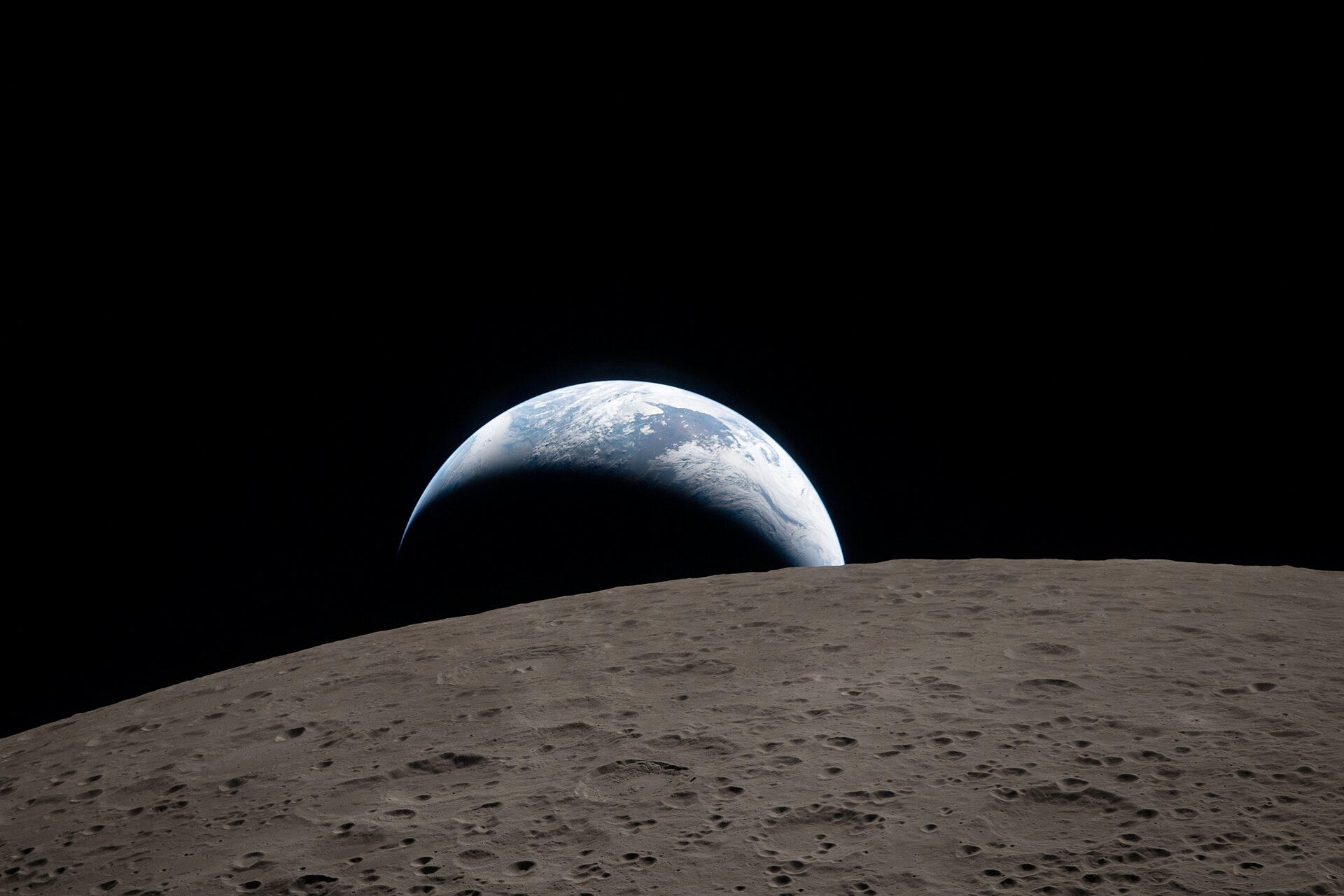
It’s so cool to me that we could look at this picture right after it was taken and instantly know that it will be one of the most important photographs taken this entire century. What a special feeling.
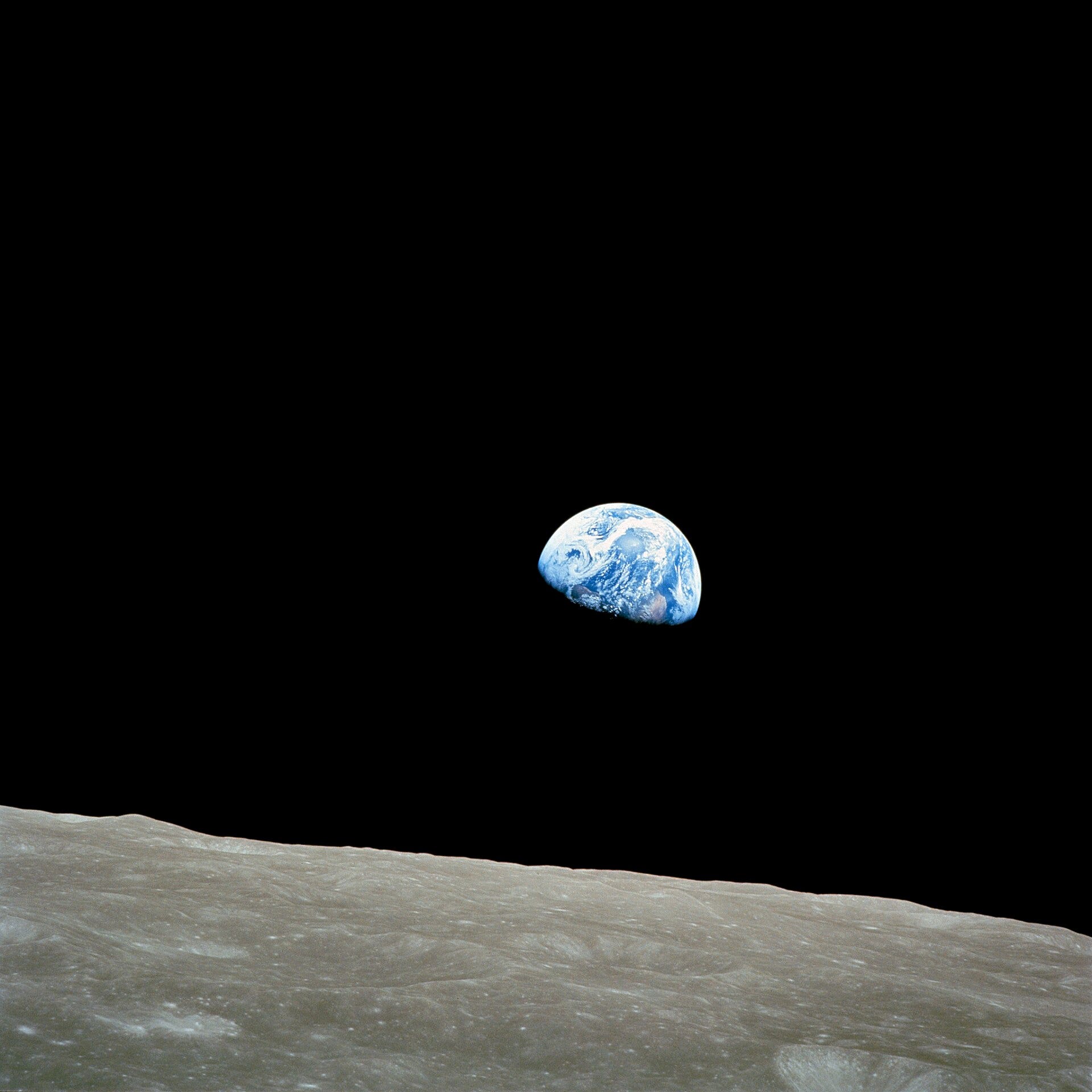
Earthset is sort of a tribute to Earthrise, taken on Christmas Eve 1968 by astronaut William Anders. In 2018, Anders reflected on the photo fifty years to the day after taking it, saying, “We set out to explore the moon and instead discovered the Earth.”
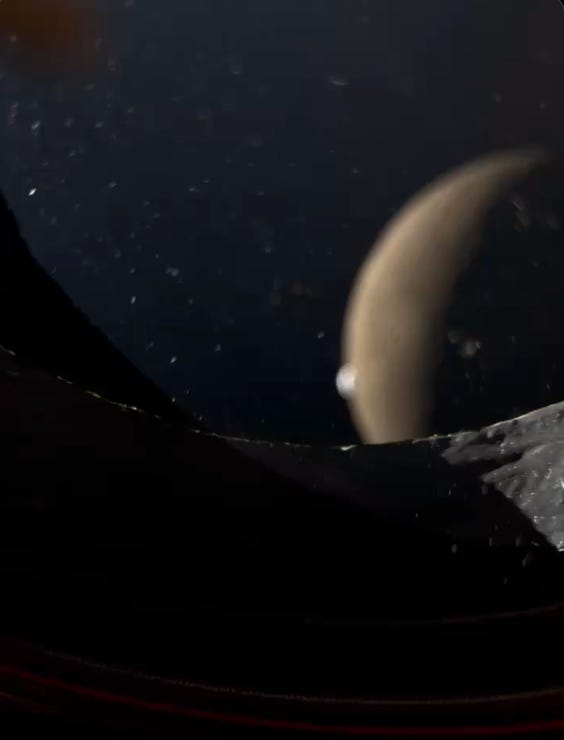
What’s even cooler than Earthset, in my opinion, is this video that astronaut Reid Wiseman took on his iPhone as the Integrity capsule disappeared behind the Moon. It really stands out to me because we’re so used to seeing these professional-quality photographs of space stuff, but how often do you see a video of the Moon that some dad just took on his phone?
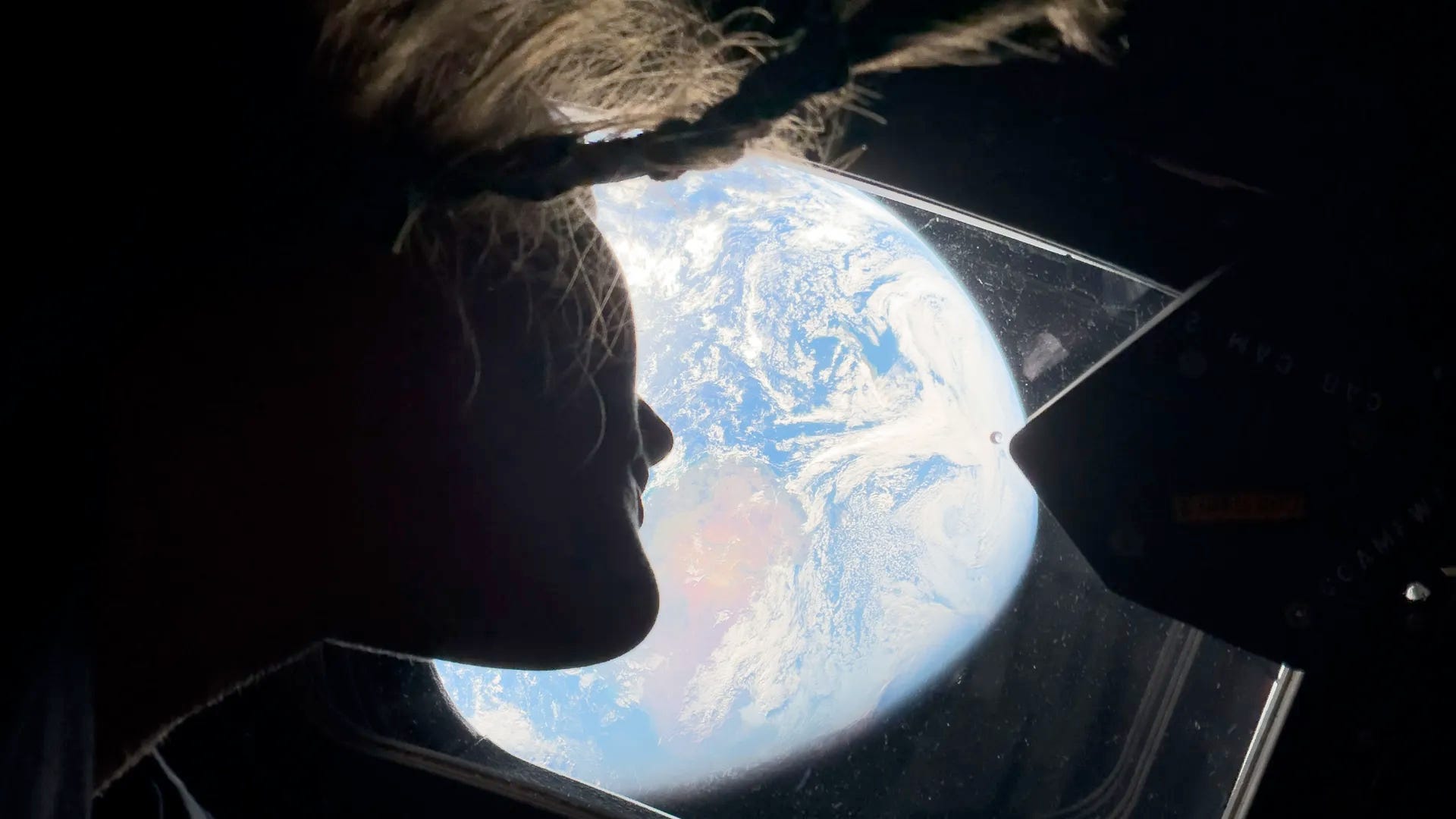
More Artemis photos! I can’t stop looking at this picture of Christina Koch looking out the window of the capsule at the Earth below. Absolutely mesmerizing. The way her braid is floating through the zero gravity air? So cool.
Anyway, I love our astronauts. I keep thinking about how generations past have looked up to Neil Armstrong and Buzz Aldrin as these idols, these giants, these heroes – and now we have our own, new heroes. Christina Koch, Victor Glover, Reid Wiseman, Jeremy Hansen. Your children’s children will be taught these names in school.
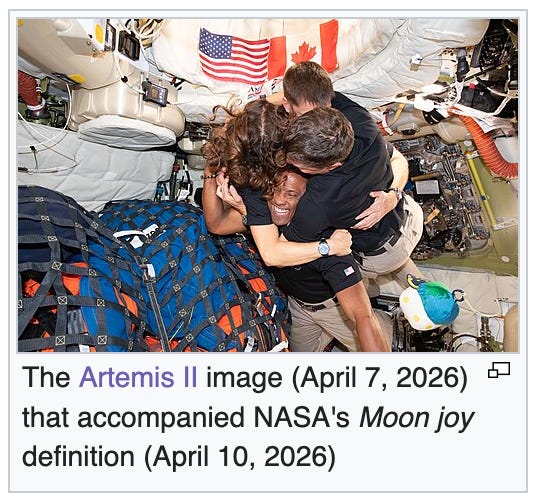
Anyway, we are living through an incredible moment in history, and we are seeing images created today that will live in history books for centuries. Assuming we still have books centuries from now.
And in the spirit of celebrating history and the beautiful treasure that is our shared human culture, let’s take a look back at some other photos that have been considered some of the most important ever taken.
First a few more space photos, then onto the rest of recorded human history
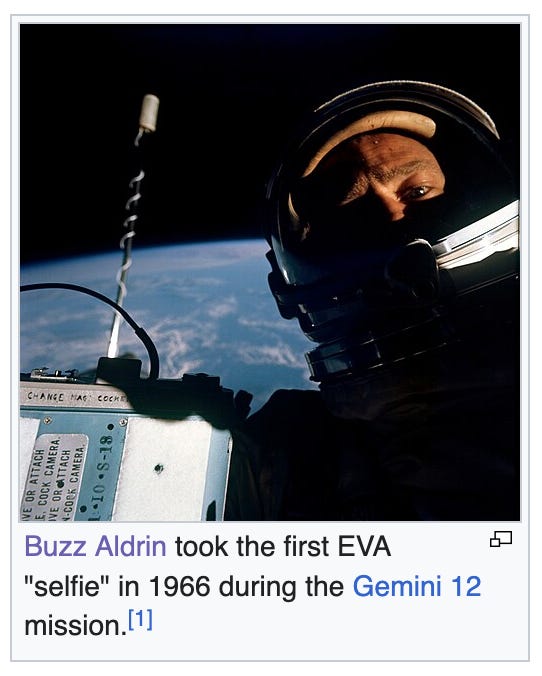
The first space selfie!
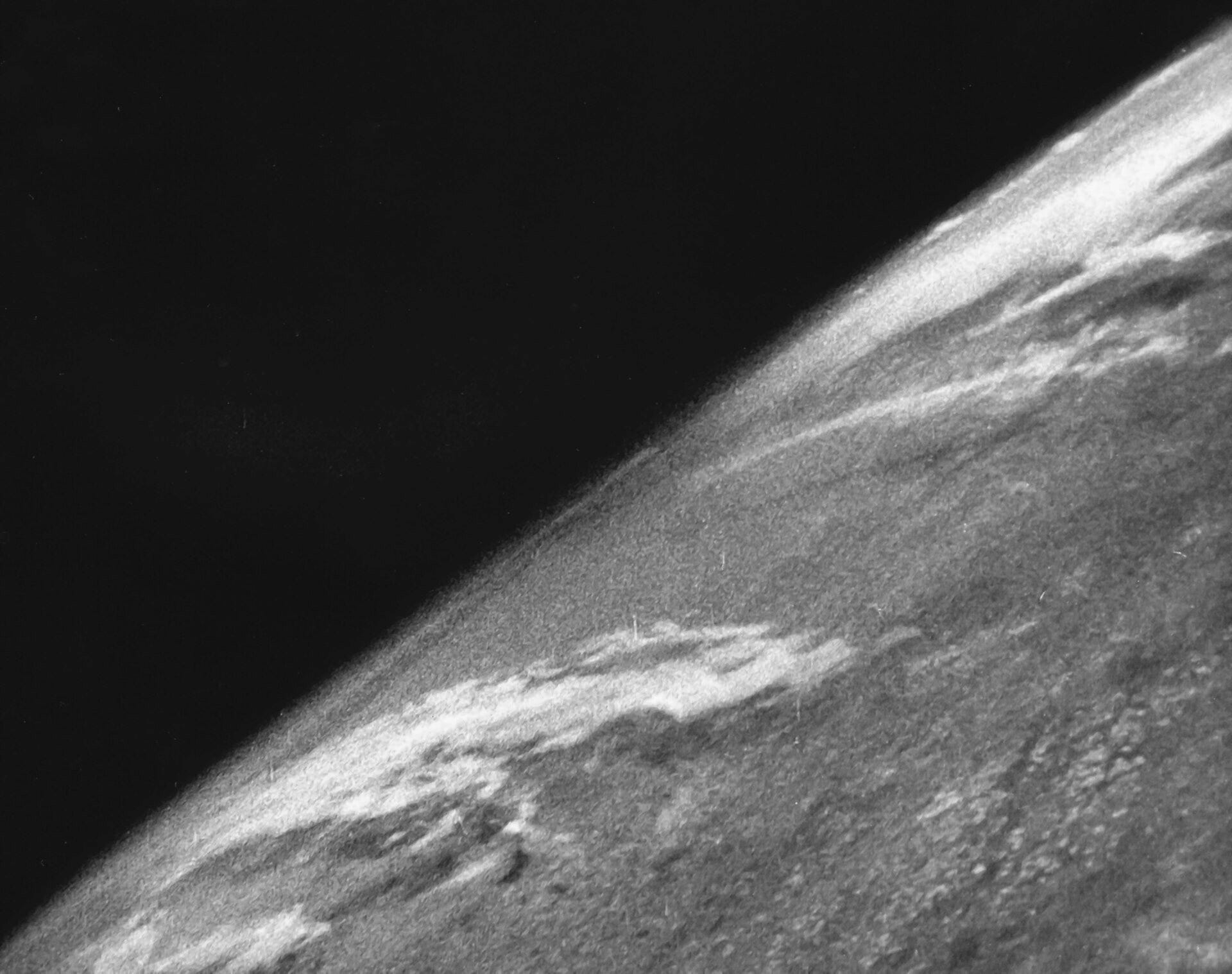
First image of Earth from space
Pale Blue Dot is one of my favorite photos ever taken. Do you see Earth in there? You might have to look closely.
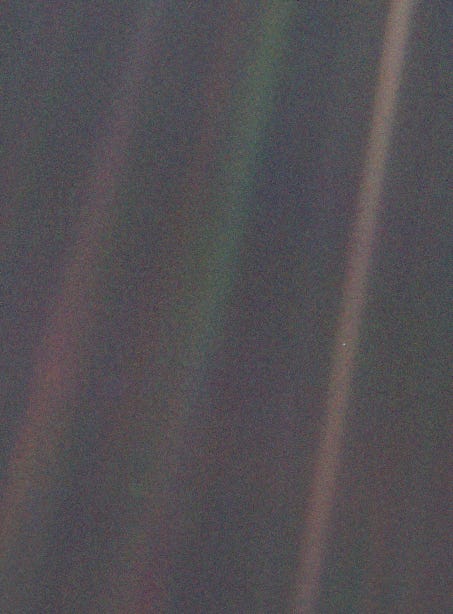
Here’s a newer version of the photo, released by NASA in 2020, created using modern image processing techniques. You can make out our home planet a little more clearly in this one.
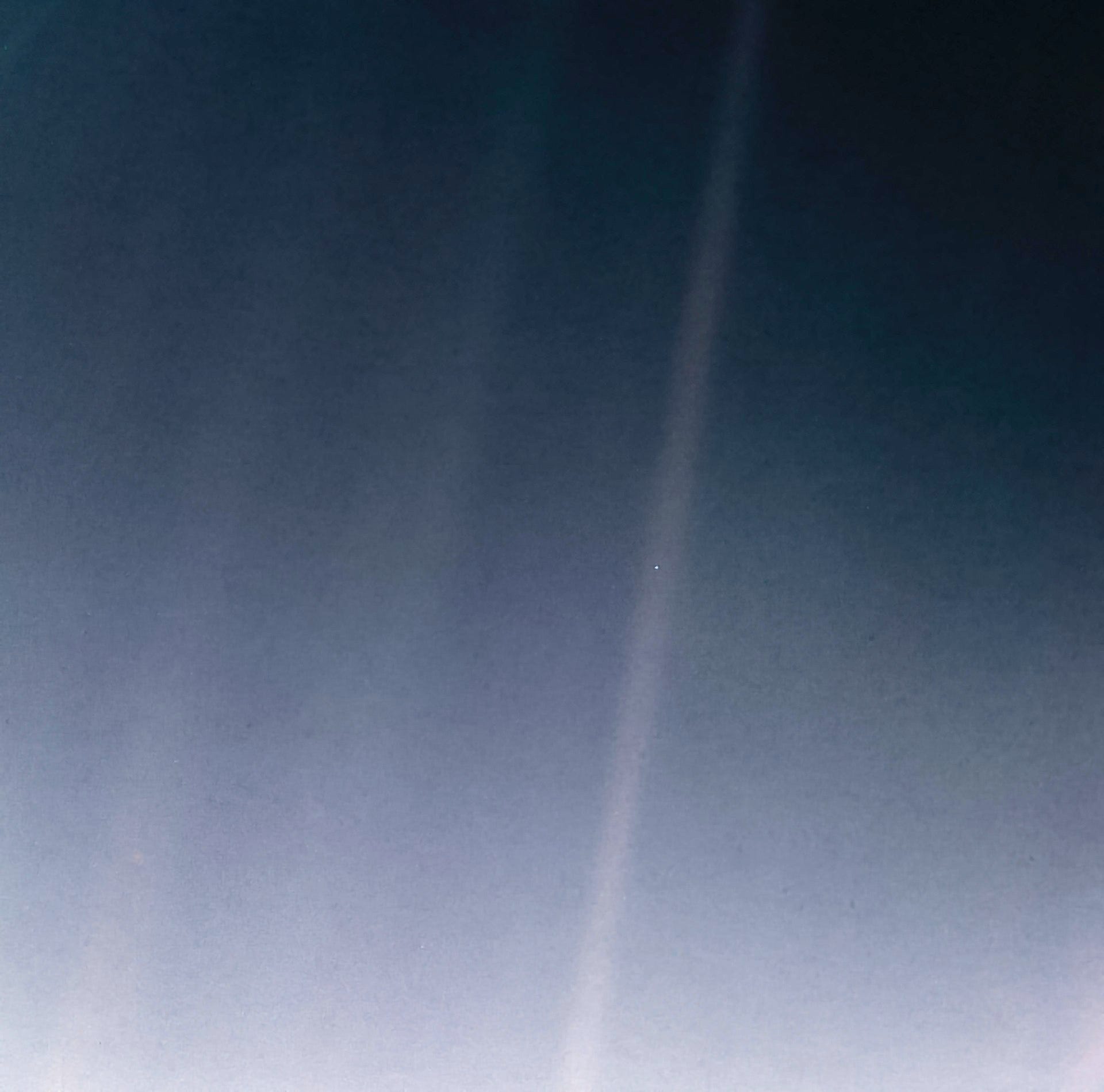
Pale Blue Dot was taken by the Voyager 1 space probe when it was 3.7 billion miles (about 6 billion km) from Earth as it was zooming further and further away from our Solar System.
Out of the 640,000 pixels in the full-size image, Earth’s size is less than a single pixel (0.12 of a pixel, to be exact).
The photo likely wouldn’t have been taken without the advocacy of Carl Sagan, who first started talking about taking a photo like this about a decade before it was actually taken, which really gives you a sense of the grand scale of these missions and their years-long timelines.
After the picture was taken, it took the radio signal transmitting the data nearly five and a half hours traveling at the speed of light to reach scientists back on Earth. Fast forward to today, 36 years later, and Voyager 1 is nearly one light day from our planet. It is expected to reach this monumental mark on November 15th, 2026 (mark your calendars!), nearly fifty years after the probe was launched.
We can’t talk about Pale Blue Dot without sharing what Sagan had to say about it. You are required to read the following paragraph:
From this distant vantage point, the Earth might not seem of any particular interest. But for us, it’s different. Consider again that dot. That’s here. That’s home. That’s us. On it everyone you love, everyone you know, everyone you ever heard of, every human being who ever was, lived out their lives. The aggregate of our joy and suffering, thousands of confident religions, ideologies, and economic doctrines, every hunter and forager, every hero and coward, every creator and destroyer of civilization, every king and peasant, every young couple in love, every mother and father, hopeful child, inventor and explorer, every teacher of morals, every corrupt politician, every “superstar”, every “supreme leader”, every saint and sinner in the history of our species lived there – on a mote of dust suspended in a sunbeam.
Seeing the Earth from such extraordinary perspectives can have a profound effect on people. There’s a phenomenon commonly experienced by astronauts called the overview effect, where their perception of self, their perception of humanity, their perception of the entire universe is completely transformed by seeing our planet from above.
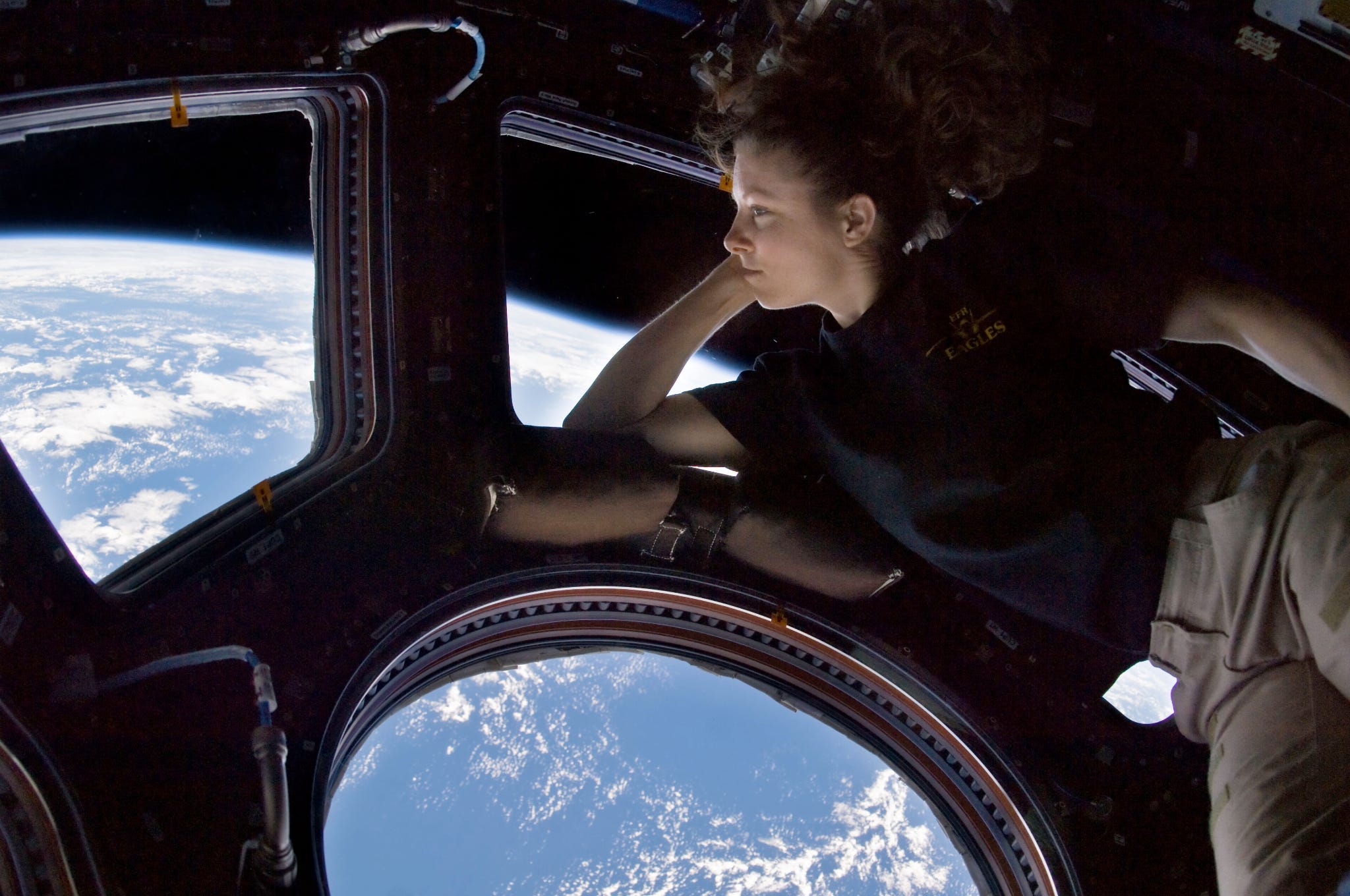
Okay, last space photo – I reaaaaally like this one because it’s like, look at that, we’re this big orb hurtling through the vastness of the universe and the only thing protecting us from the cold inhospitable vacuum of space is this pale blue line of our atmosphere. Fun, right?

Thank you for indulging me, back to Earth now
Look, it’s the first photograph ever taken! Presenting: View from the Window at Le Gras, taken in 1826 in Saint-Loup-de-Varennes, France.
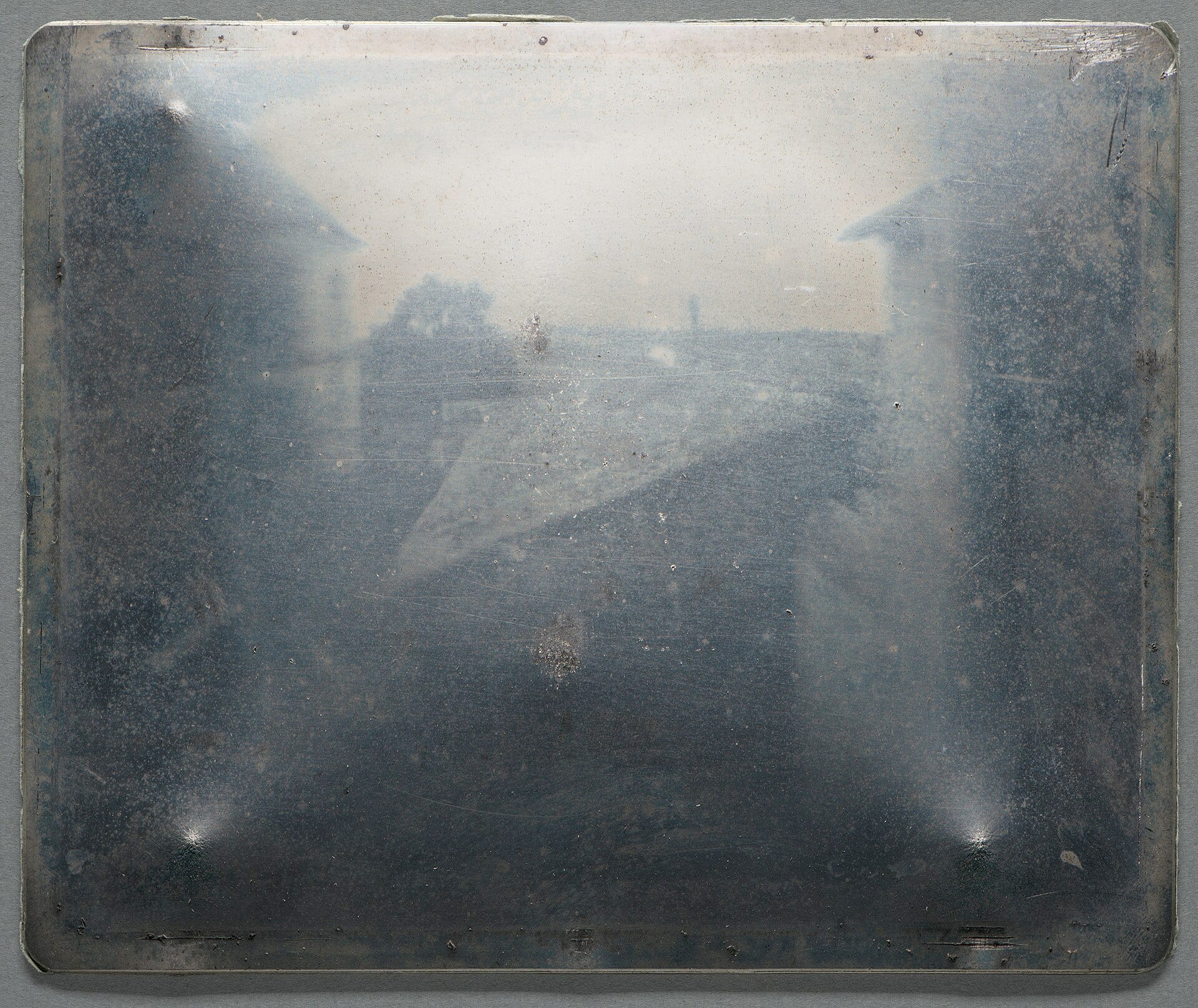
If you live in Austin, TX, you can go see the original plate on display at the Harry Ransom Center!
Somebody on Reddit shared this “modern remake” of the image, and it’s not clear to me how this image was created (it’s from 3 years ago so I don’t feel like AI was good enough then?), but I’ll just share it here to give you a better sense of what you’re actually looking at in the image.
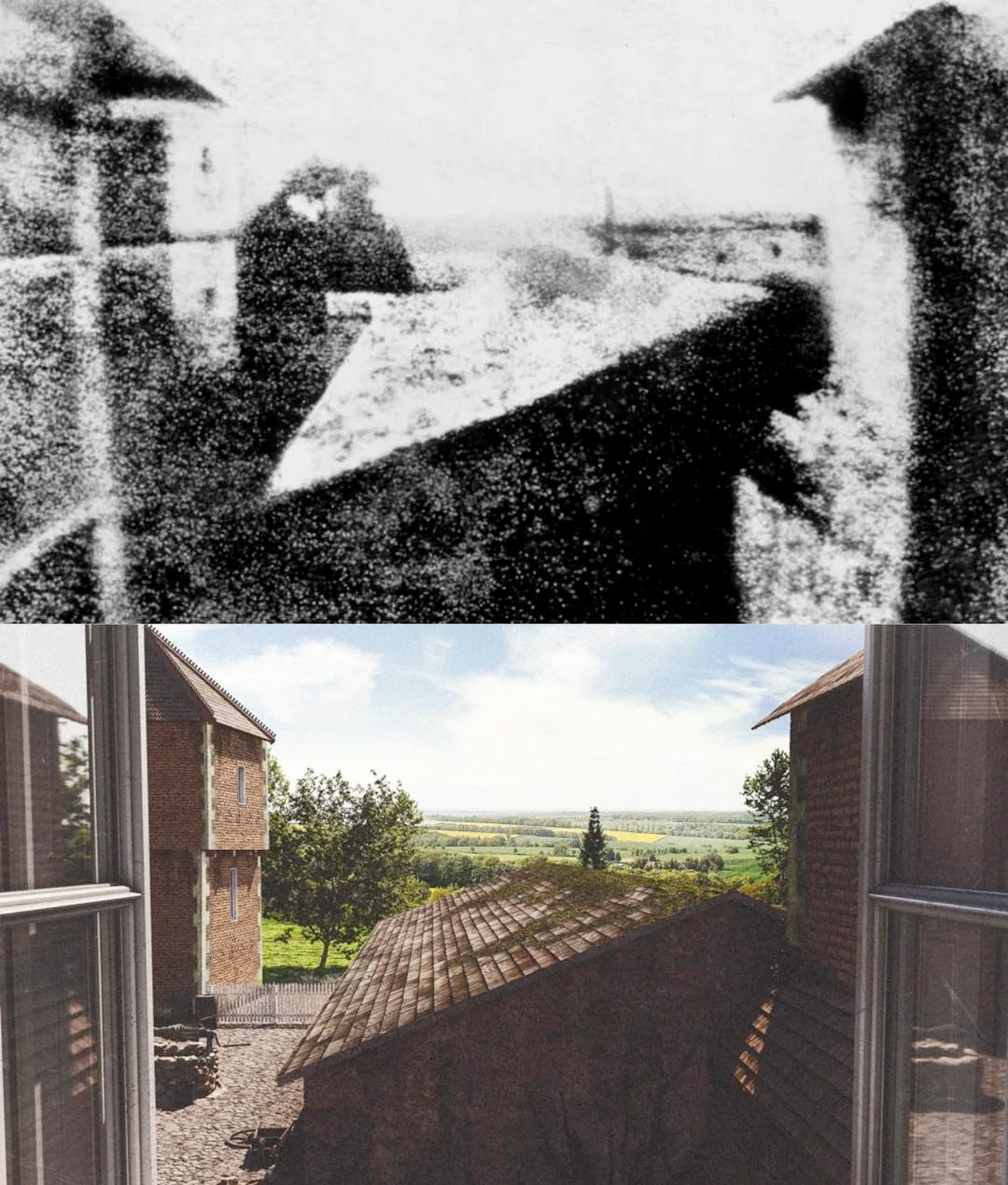
View from the Window at Le Gras was captured using camera obscura techniques and had a likely exposure time of eight hours to several days.1
Here’s the first photograph that includes an image of a human, taken in Paris in 1838.
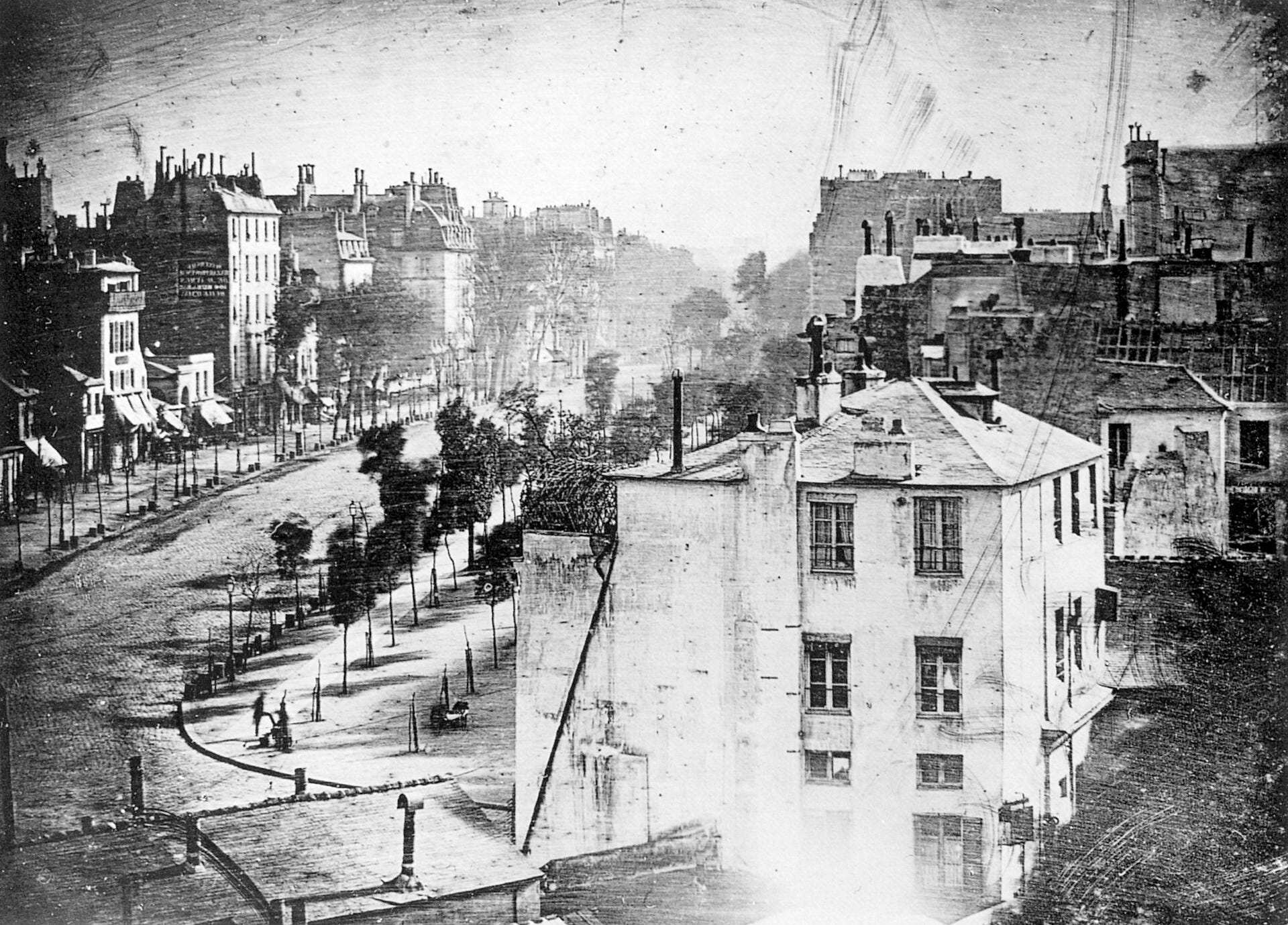
The street was apparently quite busy at the time of the photo, but because the exposure was five minutes long, the only people who are actually visible in the final image are the two men in the bottom left corner, one seemingly polishing the other’s boots.
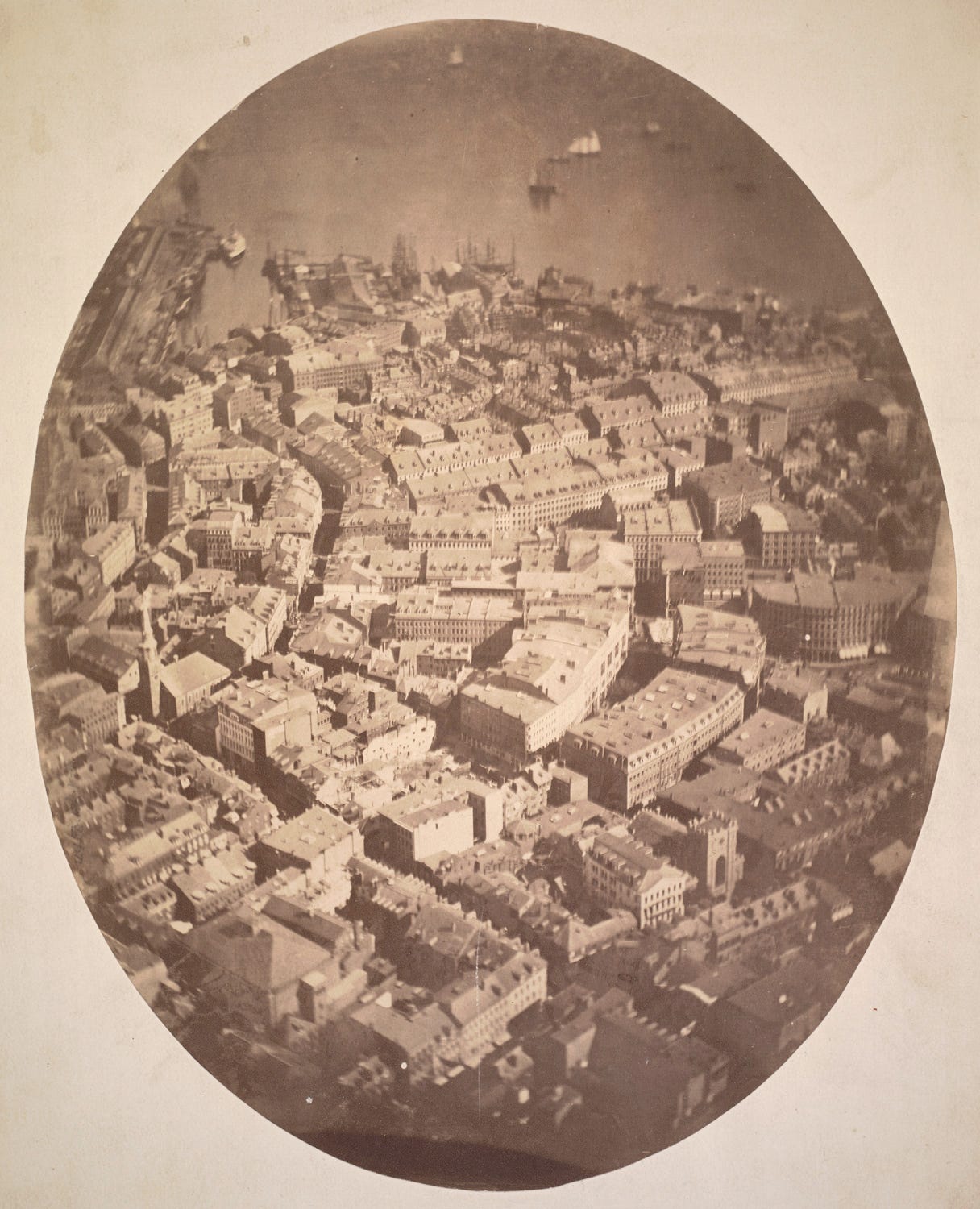
From 1860, we have the oldest aerial photograph, taken from a hot air balloon above Boston.
And the first X-ray, taken by its inventor in 1895, featuring his wife’s hand and ring.
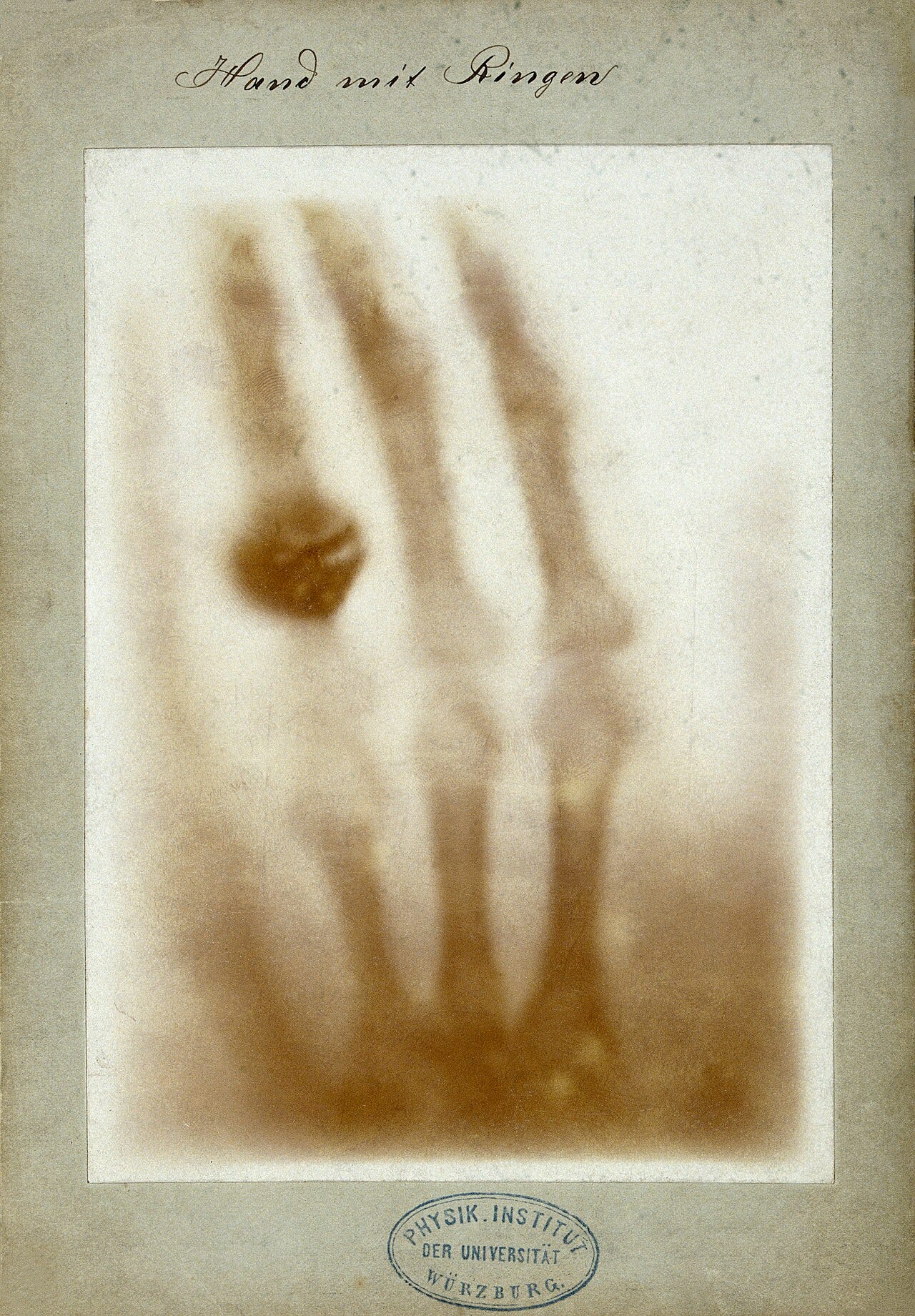
After seeing the image, she reportedly said, “I have seen my death.”
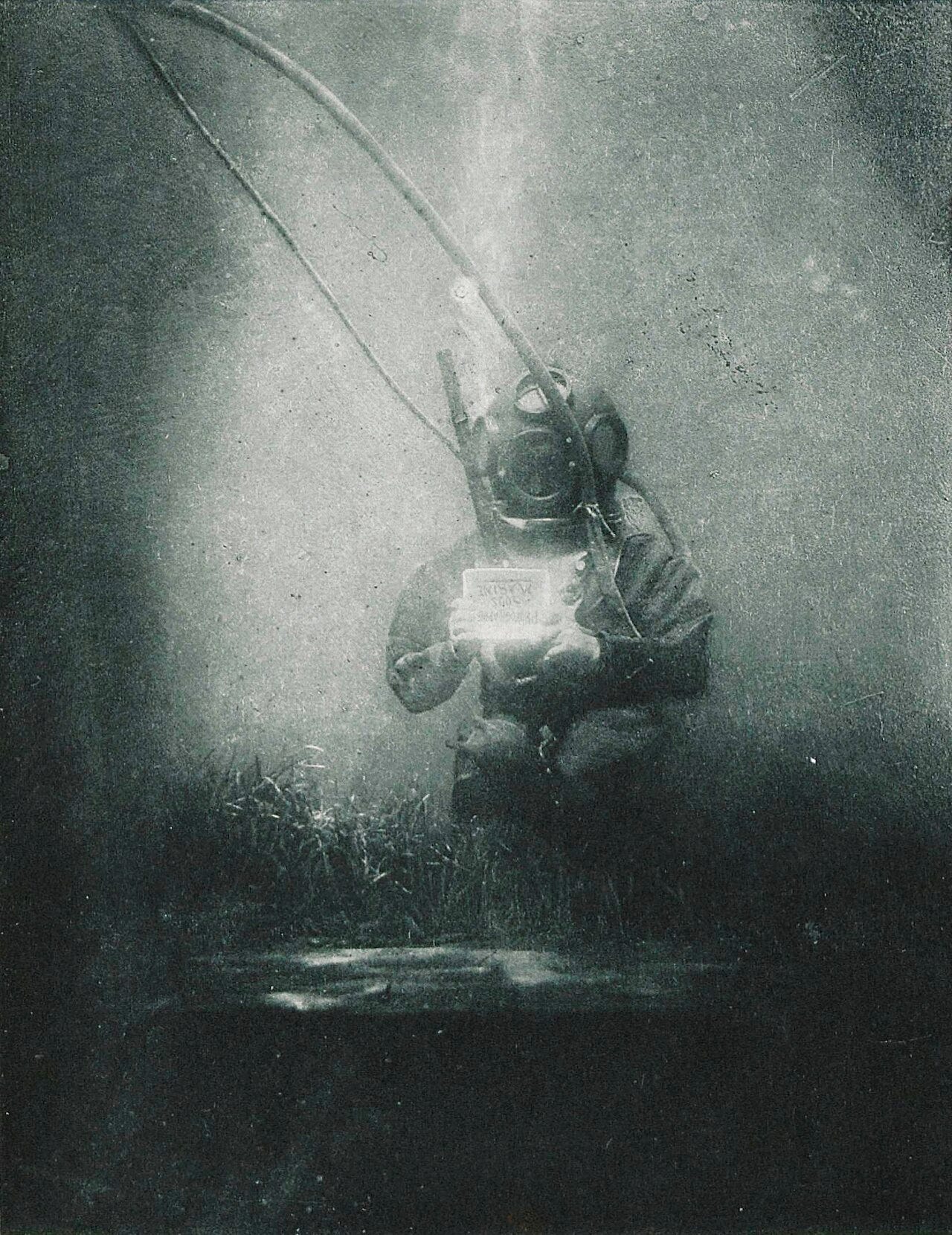
From 1899, the first underwater photograph, as well as the first taken by a camera designed for underwater photography:
I love this next photo – it doesn’t have any fancy accolades but it’s included on the “List of photographs considered the most important” anyway, and I think it stands out because it’s just a photo of someone having fun at a time when most photos were still very serious and/or boring.
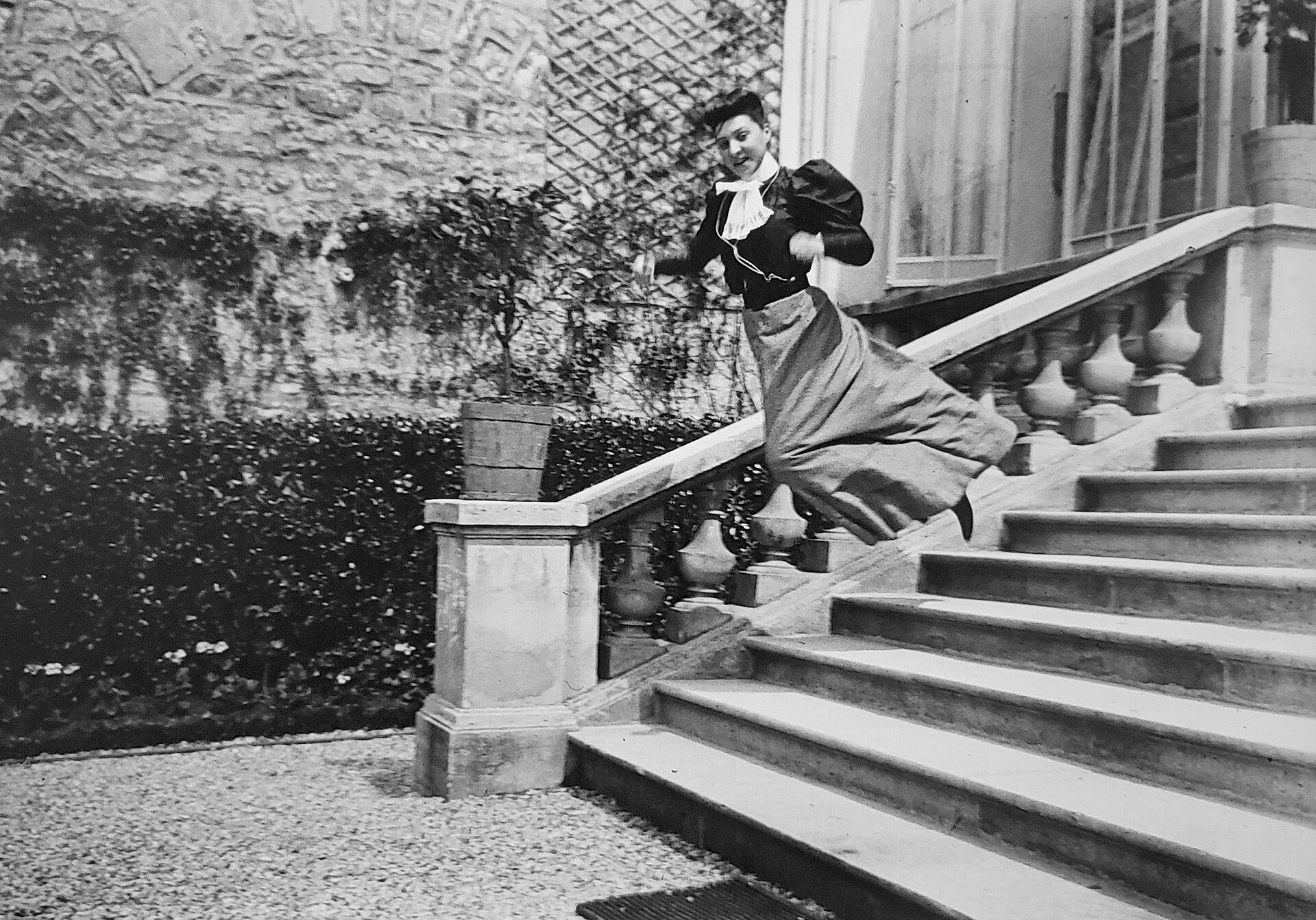
And it gets even more fun – the photographer was only 11 years old! He would go on to take photos his entire life, but he made his living as a painter and didn’t become known for his photography until he was nearly 70.
This fella, Jacques Henri Lartigue, also participated in the painting event at the 1924 Summer Olympics in Paris. Oh yeah, did you know they used to have art competitions at the Olympics? Brb, lobbying LA 2028 to include a Substack event. I will happily accept bronze.
Migrant Mother is easily one of the most iconic photos in American history.
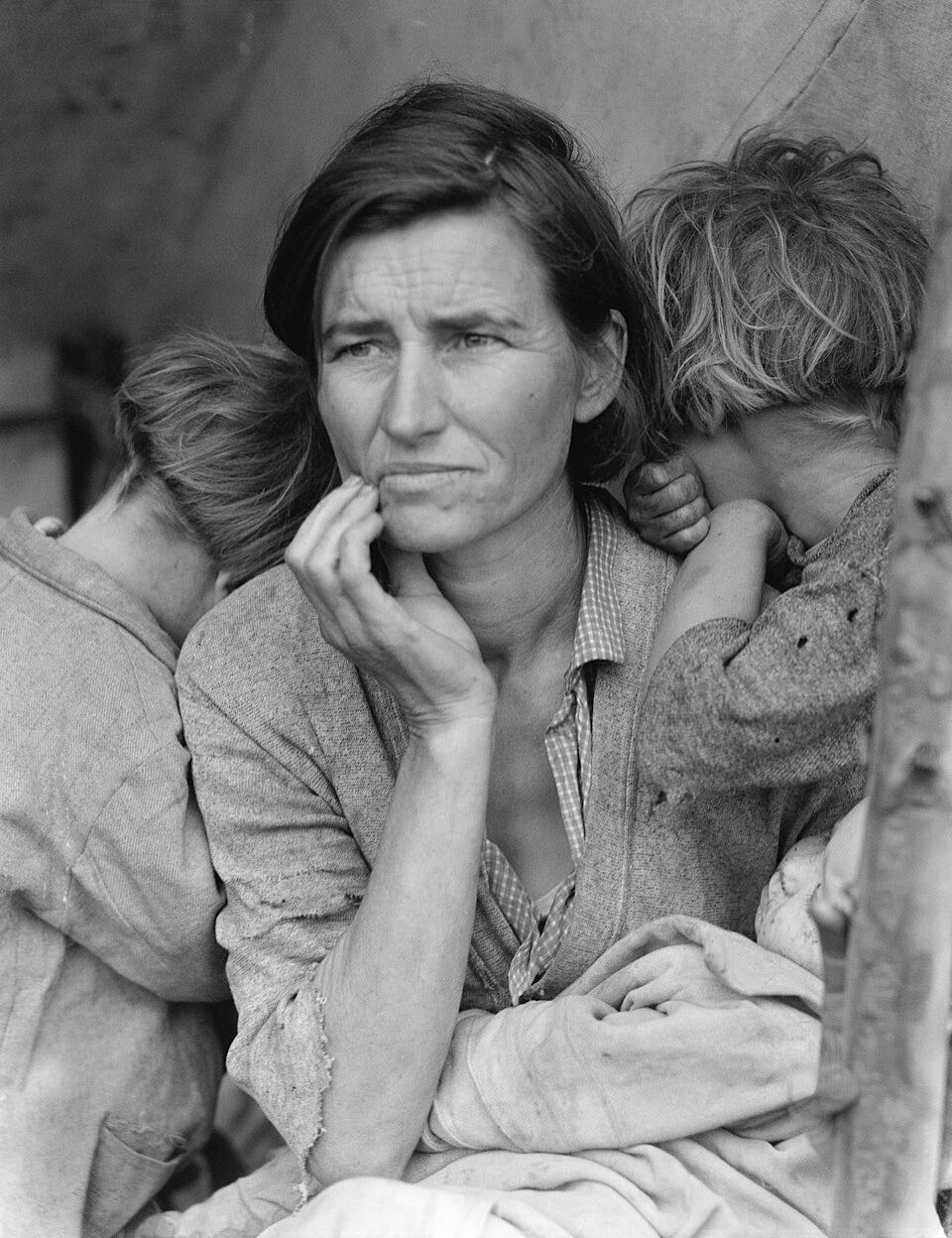
Did you know the photographer, Dorothea Lange, took five additional shots of the woman and her children? You can see them on the Wikipedia page, but I’ll share my favorite of the five here.
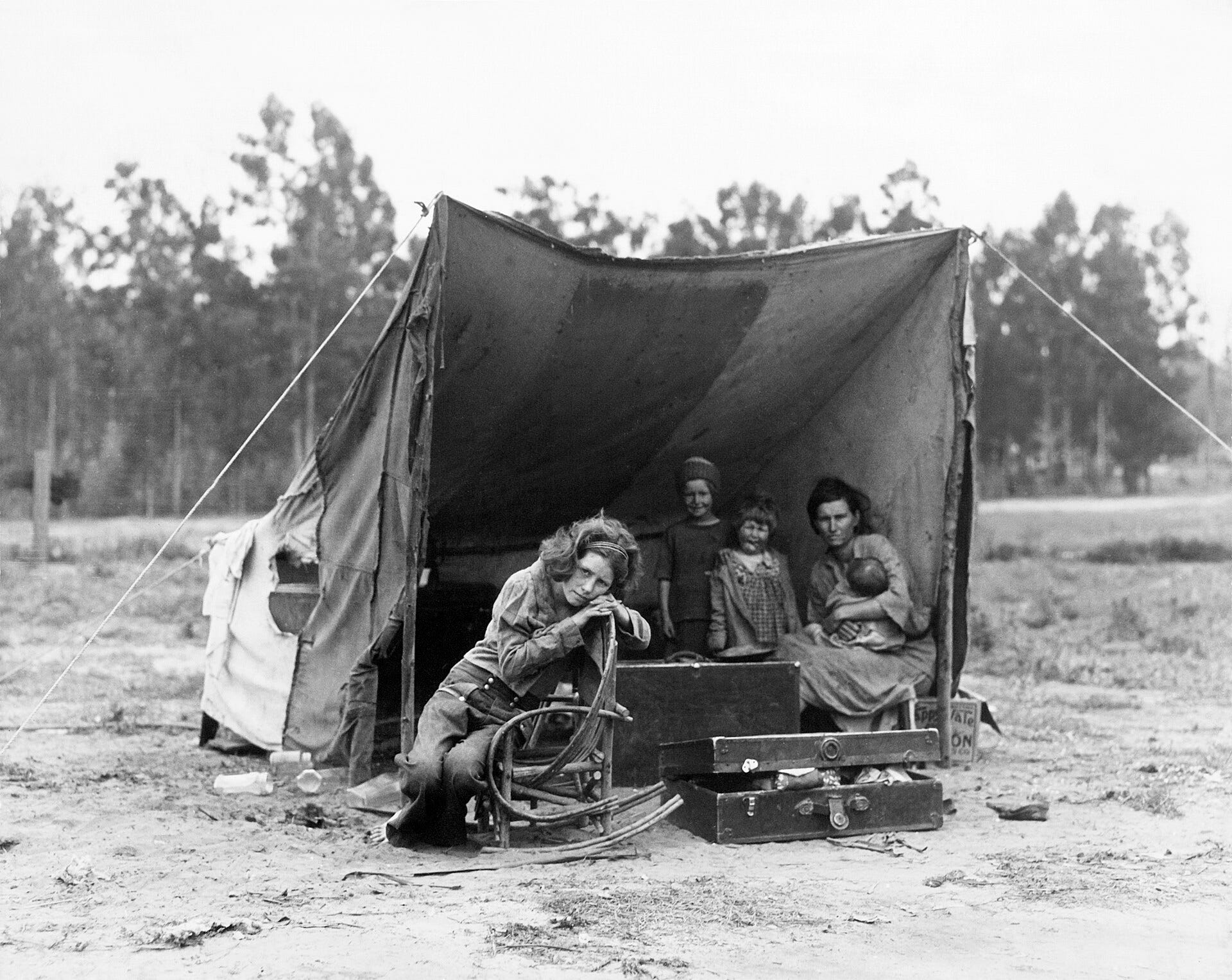
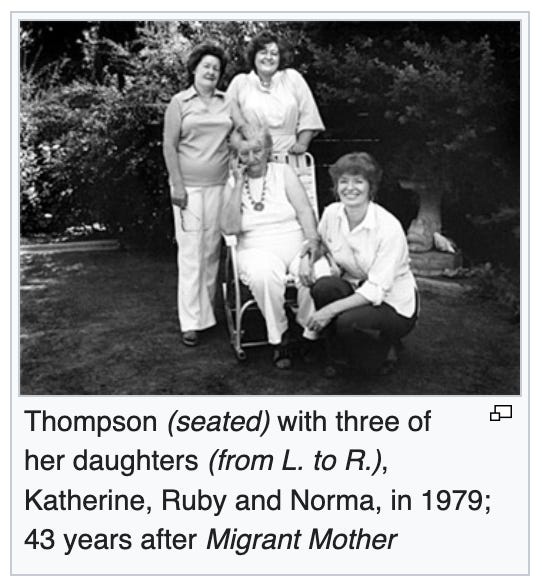
The photo was taken in 1936 but the subject of the photo, Florence Owens Thompson, wasn’t identified until 1978.
When Lange took the photos, Thompson and her family were pulled over in a pea-pickers camp after their car broke down and they were able to coast to a stop just inside the camp. Freezing rain had destroyed the crop so there was no work available for them.
Thompson did all sorts of work to support her family: “I worked in hospitals. I tended bar. I cooked. I worked in the fields. I done a little bit of everything to make a living for my kids.” She sometimes picked up to 500 pounds of cotton a day.
An interviewer asked her, “Did you ever lose hope?”
“Nope. If I’d’a lost hope, this country never would have made it.”

.jpg)
.jpg)


,_Ni%C3%A9pce_1827_%E2%80%94_HRC_2020_(cropped).jpg)


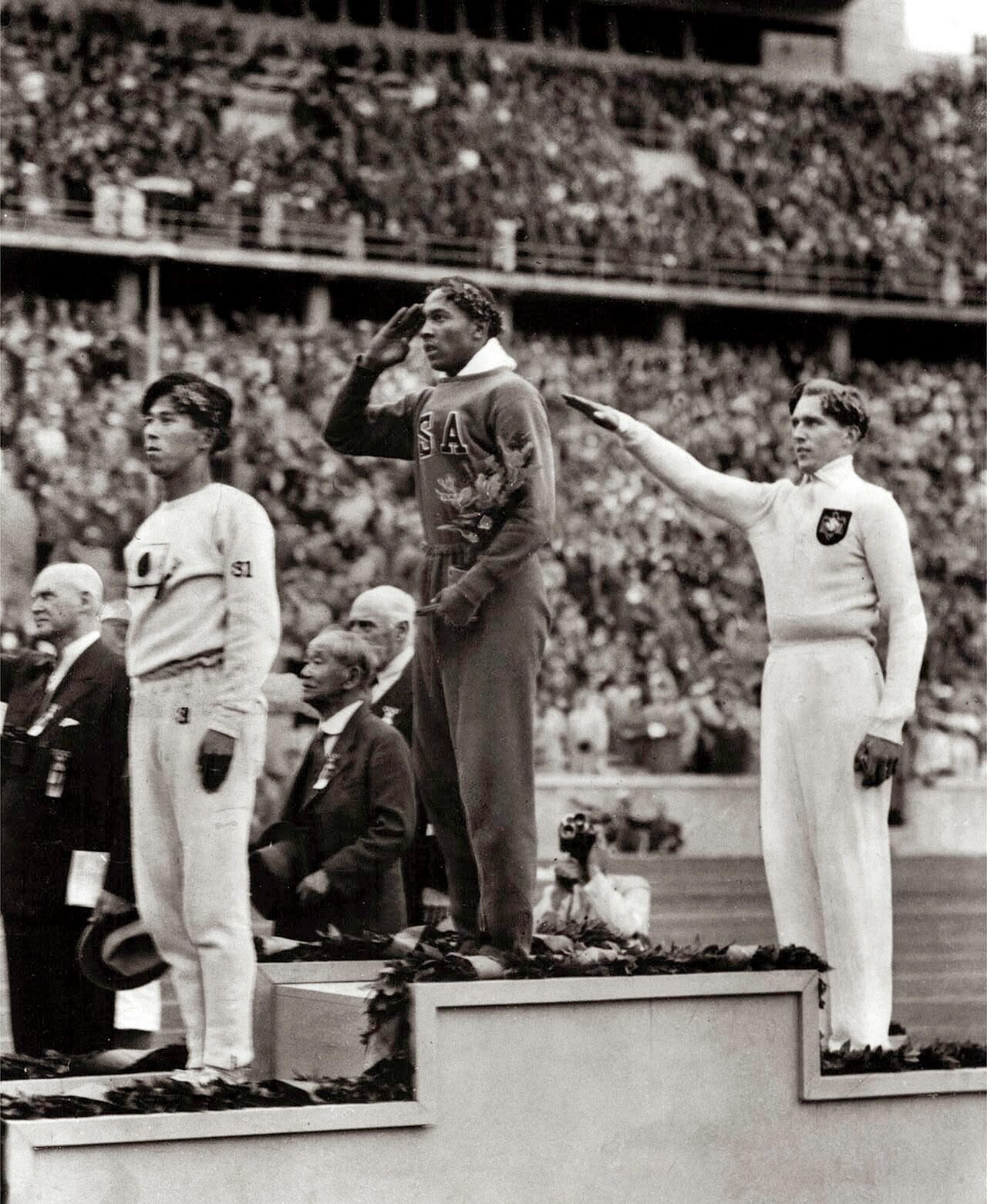
Jesse Owens Salute (1936)

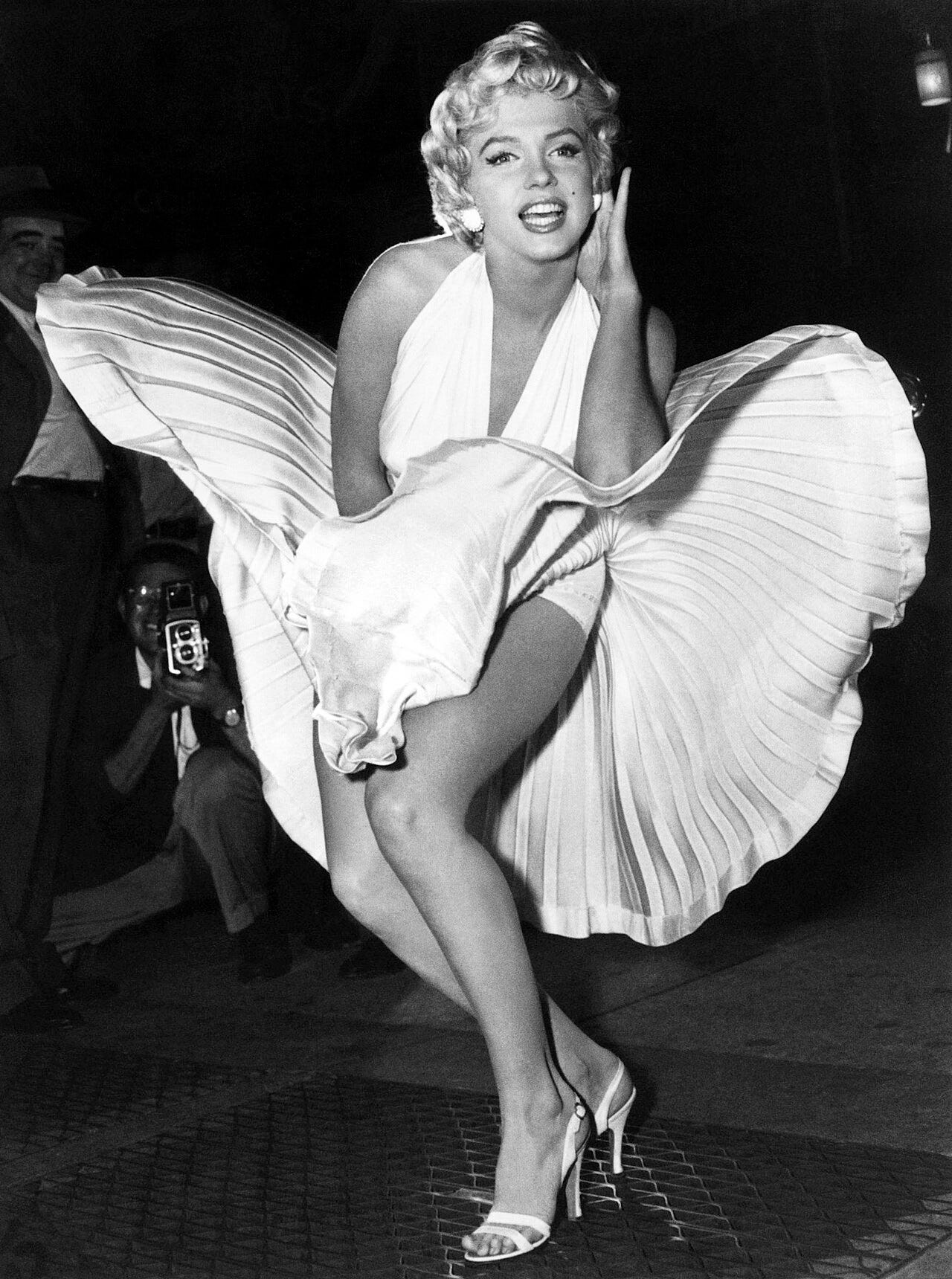
Monroe (1954)

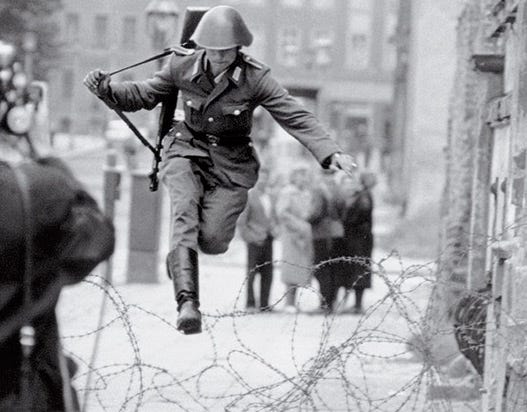
Leap Into Freedom (1961)

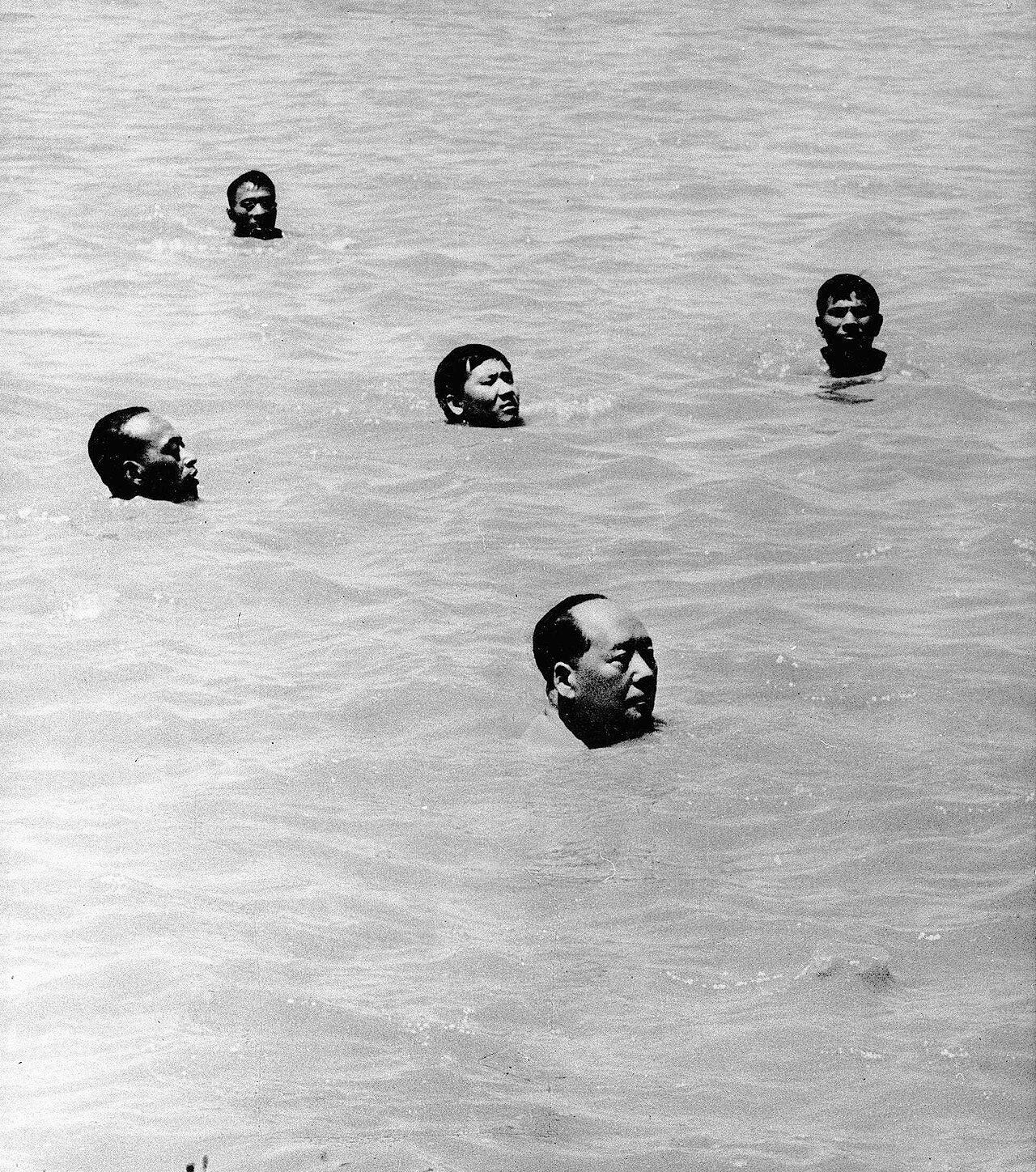
Chairman Mao Swims in the Yangtze (1966)

Below, in an iconic series of photos symbolic of the fight for women’s rights, we see what happened when Kathrine Switzer became the first woman to run the Boston Marathon as an officially registered competitor in 1967.
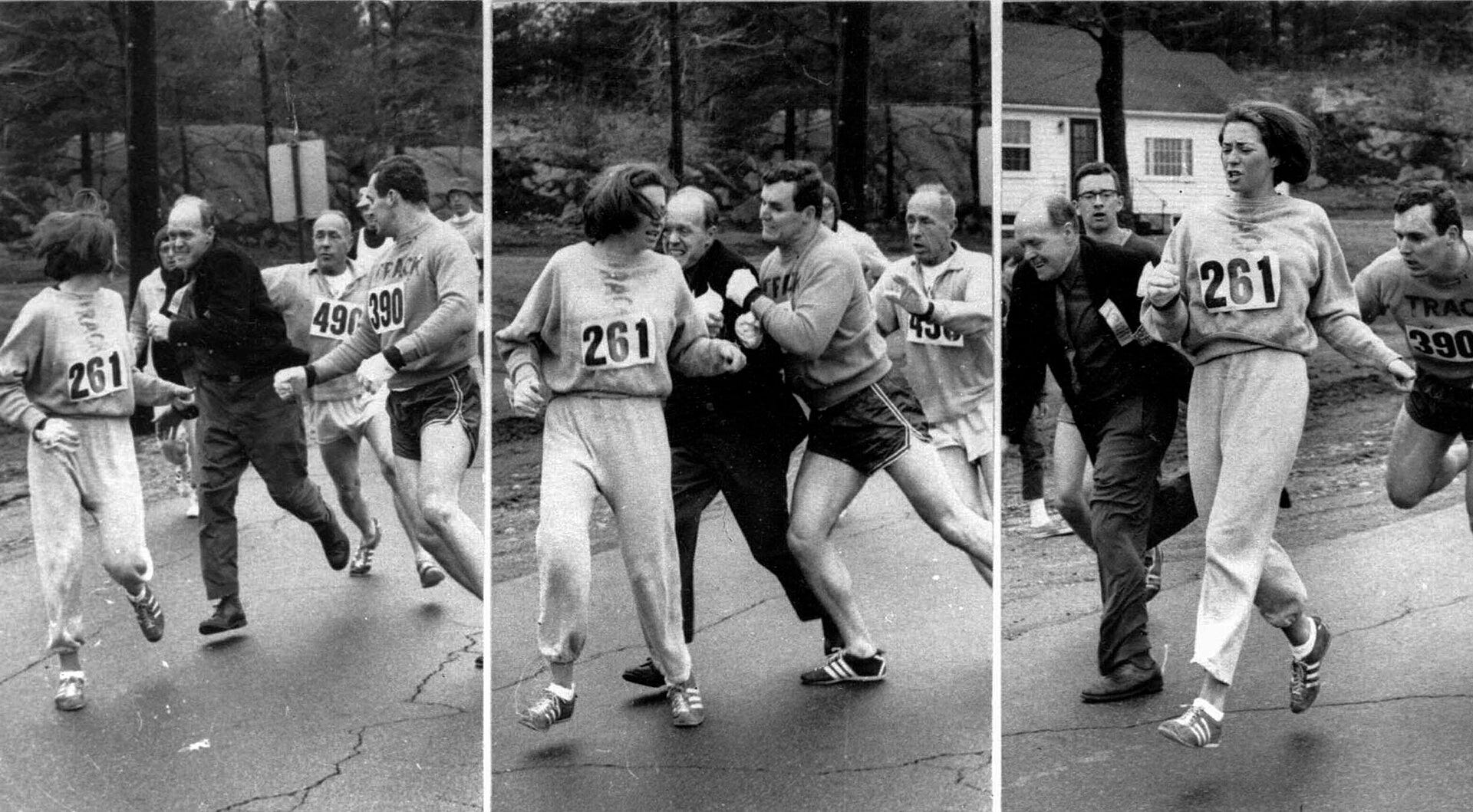

A year earlier, Bobbi Gibb tried to register for the race but was turned away on the grounds that women were apparently physiologically incapable of running 26 miles.
Gibbs ran the race anyway, entering the course as an unofficial entrant near the starting gates, and finished with a time of 3:21:40, beating two-thirds of the runners.
The next year, Switzer decided to run as an official competitor, registering under the name “K.V. Switzer” and having a male runner pick up her race bib for her.
Sports Illustrated reported, “She has crashed the Boston Marathon, an event for men only, having obtained an entry number through chicanery. [...] Miss Switzer pleads that she was ignorant of the rule barring women but that, uhm, uh, well, she resorted to a conspiracy just in case.”
According to ESPN, there weren’t actually any rules specifically prohibiting women from running the marathon, because “the idea of women running the 26.2-mile distance was so foreign, the rulebook made no mention of them.”
Now, let’s learn a little bit about the angry bald fella trying to tackle Kathrine. This is Jock Semple, a race official for the Boston Marathon, and he took his role very seriously. As Wikipedia’s editors note, he was “a strict traditionalist who considered the marathon to be ‘sacred’, and was infamous for charging angrily after participants he found insufficiently serious about the race.”
Sports Illustrated expands on that “charging angrily after participants” thing:
With a shriek, he clambers down from the bus and bounds after them. “He hurls not only his body at them,” Cloney says, “but also a rather choice array of epithets, which fortunately are made indistinguishable by his [Scottish accent].”
One year, a man decided to run the marathon in an Uncle Sam outfit, with an ad for storm windows on his back. The response: “Jock, lugging a tray in one hand, matched him stride for stride, dashing his face with cups of water.”
Another year, a man donned “webbed snorkeler’s shoes and a grotesque mask” to run the race, so “Jock made a flying tackle” at him, but “missed and splashed face down in a gutter.” Race officials “were barely able to dissuade the Framingham police from arresting him for attempted assault on the runner.”
“The thing that made me so damned mad,” Jock explains, “was that the guy was runnin’ with the good runners.”
Reading all this, the sanctity of the race in Jock’s mind becomes very clear.
“Jock is the guy who gets things straightened out.” At the Yonkers Marathon, for example, he darts ahead of the runners in his car, blasting away on his horn, demanding a clear road. Stop the world, he seems to cry, there’s a race coming through! “If a President’s funeral were coming from the opposite direction,” says another of his runners, John Linscott, “Jock would make it back off.”
On the topic of women’s participation in athletics, Sports Illustrated decided to quote him while retaining his Scottish accent, which was a fantastic editorial choice:
“I’m not o’poozed t’ women’s athletics. But we’re taught t’ respect laws—t’ respect rules. The amateur rules here say a woman can’t run more th’n a mile and a half.”
Also, the director of the Boston Athletic Association sharing his thoughts on women running the race:
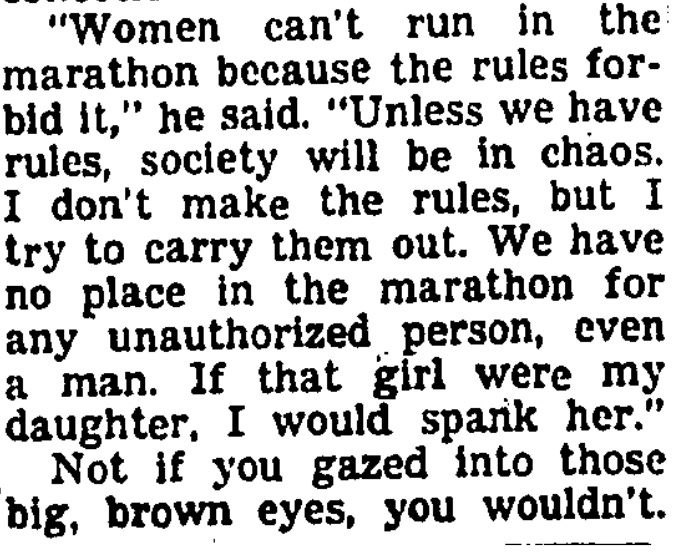
Anyway, as you can see in the photo, Kathrine’s boyfriend shoved Jock Semple to the ground and Kathrine finished the race in about 4 hours and 20 minutes. Here is Kathrine recounting her train of thought during the experience:
I felt puke-ish, afraid that we’d seriously hurt this guy Jock Semple, and maybe we should stop and get it sorted out. But it was clear Jock was some kind of official—in fact, he turned out to be the race manager—and he was out of control. Now he’s hurt, we’re in trouble, and we’re going to get arrested. That was how scared I felt, as well as deeply humiliated, and for just a tiny moment, I wondered if I should step off the course. I did not want to mess up this prestigious race. But the thought was only a flicker.
I knew if I quit, nobody would ever believe that women had the capability to run 26-plus miles. If I quit, everybody would say it was a publicity stunt. If I quit, it would set women’s sports back, way back, instead of forward. If I quit, I’d never run Boston. If I quit, Jock Semple and all those like him would win. My fear and humiliation turned to anger.
After the race, the Amateur Athletic Union officially banned women from running in races against men. Five years later, women were accepted into the Boston Marathon as official participants for the first time. Kathrine ran the race again, and I’ll let her tell you what happened:
I finished third in that 1972 race and Jock Semple presented me with my trophy, which was broken. He apologized for that, but said, “I’ve been mad at you for five years and you deserve a broken trophy.” The next year he gave me a starting line kiss in front of the press cameras, and we became the best of friends.
As Kathrine notes at the end there, she and Jock later became friends, which is not the ending I would have guessed from looking at the photo, Here is Kathrine explaining how she warmed to Jock:
I realized Jock Semple was just an over-worked race director protecting his event from people he thought were not serious about running. Sure, he was notorious for his bad temper. And, sure, he was a product of his time and thought women shouldn’t be running marathons. But I wanted to prove him wrong on that point. Thus it was really Jock who gave me the inspiration to create more running opportunities for women. Almost every day of my life I thank him for attacking me, because he gave me this spark. Plus, he gave the world one of the most galvanizing photos in the women’s rights movement. Sometimes the worst things in your life can become the best things.
Kathrine kept running after this and would eventually complete the Boston Marathon nine times, most recently in 2017, when she was 70 years old. This was the 50th anniversary of her historic race in 1967, and she was once again assigned bib number 261.
This time, however, Kathrine was not alone. Nearly 14,000 women ran the Boston Marathon in 2017. Kathrine finished the race in 4:44:31, and her bib number 261 was retired after the race.
Kathrine is still alive today (79 years old at time of writing) and continues to have a tremendous impact on the world of women’s sports. She was a primary organizer of a women’s-only running circuit and made major contributions towards the inclusion of the women’s marathon in the Olympics for the first time ever at LA 1984.
Let’s close out Kathrine’s story with this touching quote from two-time Olympian Kara Goucher:
“I met her when I ran Boston the first time in 2009. It is fair to say that her courage to run the Boston Marathon paved the way for me to live the life that I do. Thanks to her bravery, I am living my dreams and running professionally.”
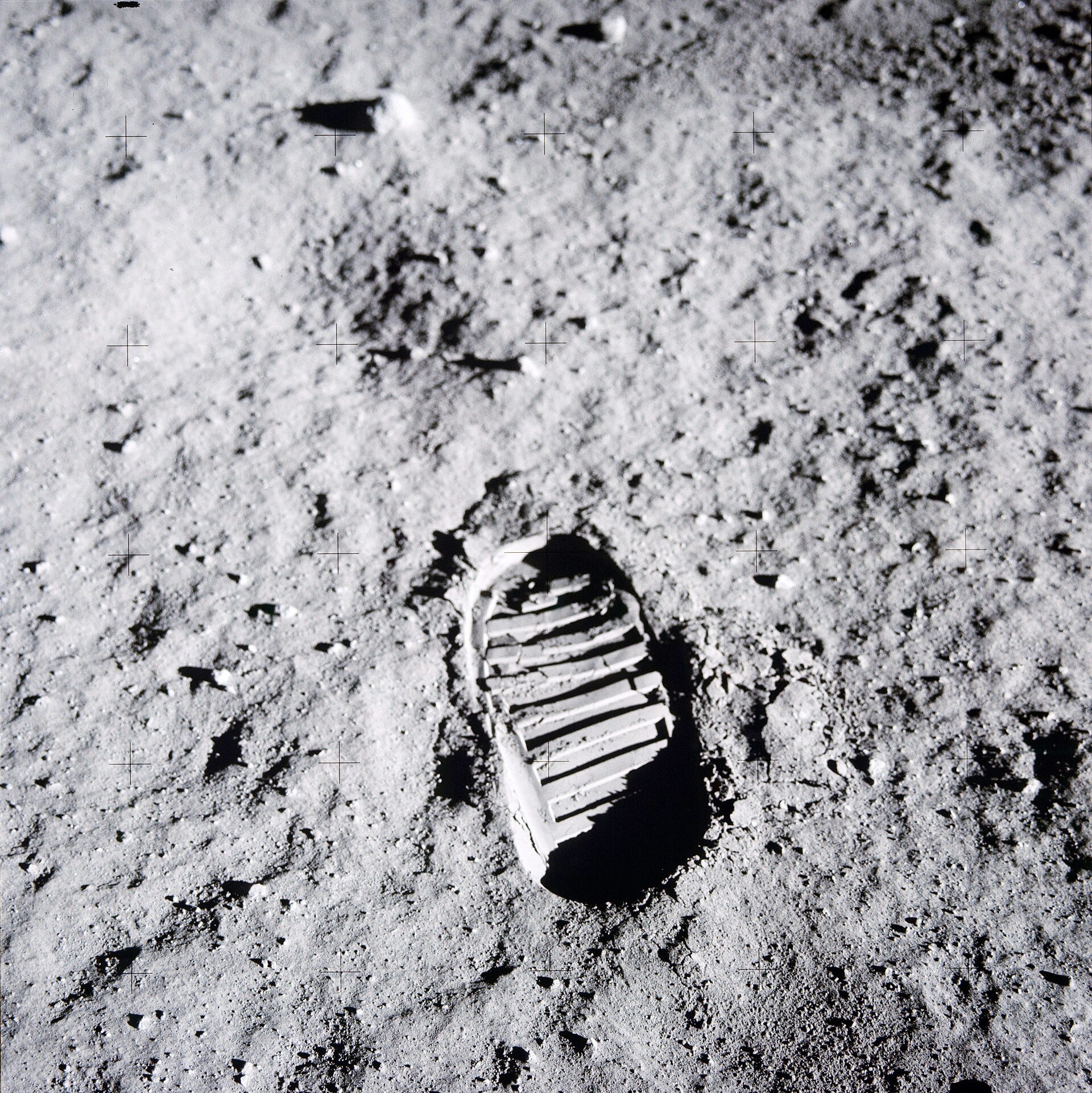
Apollo 11 Bootprint (1969)

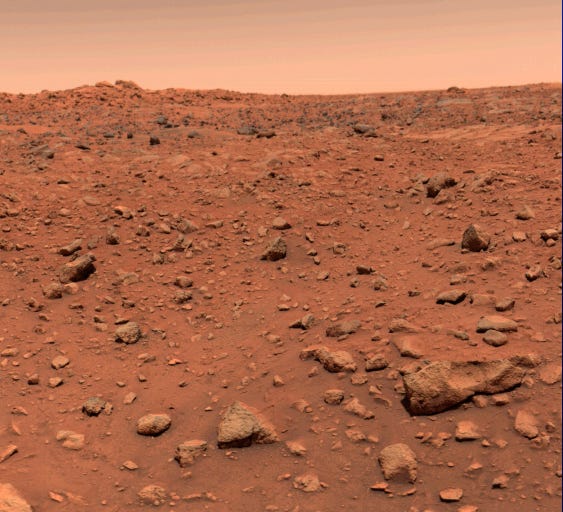
The Red Planet (1976) – the first color photograph taken from the surface of Mars.

Look! It’s the first-ever cellphone picture, taken June 11th, 1997.
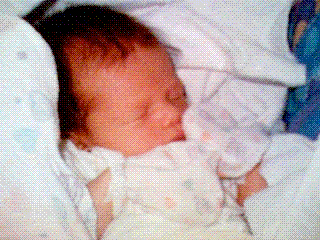

The photo was taken by a fella named Philippe Kahn, and the subject is his newborn daughter, Sophie. (Sophie will turn 29 this summer - happy early birthday to Sophie!)
Prior to taking and sharing the photo, Phillippe had been working to create a “Web-based infrastructure” for instant photo sharing for nearly a year, but he’d yet to crack the code. Thankfully, the looming deadline of the birth of his daughter gave him a nice incentive to finish the project.
“I had always wanted to have this all working in time to share my daughter’s birth photo, but I wasn’t sure I was going to make it. It’s always the case that if it weren’t for the last minute, nothing would ever get done.”
When his wife went into labor, Phillippe started out trying to be helpful but quickly learned that his help was not required:
In this case, Phillippe’s “something to do” was jury-rigging a cellphone-based contraption that enabled instant wireless photo-sharing, forever changing the way that humans communicate and transmit culture. If it was me I probably would have just fiddled with a Rubik’s Cube for 18 hours without ever coming close to solving it. Men come in all shapes and sizes. We are not a monolith.
Anyway, you can check out this 4-minute video reenacting the invention if you are curious.
Last photo! Pete Souza’s Hair Like Mine is easily one of the most iconic photos of the Obama Administration and there’s a very cute story behind it.
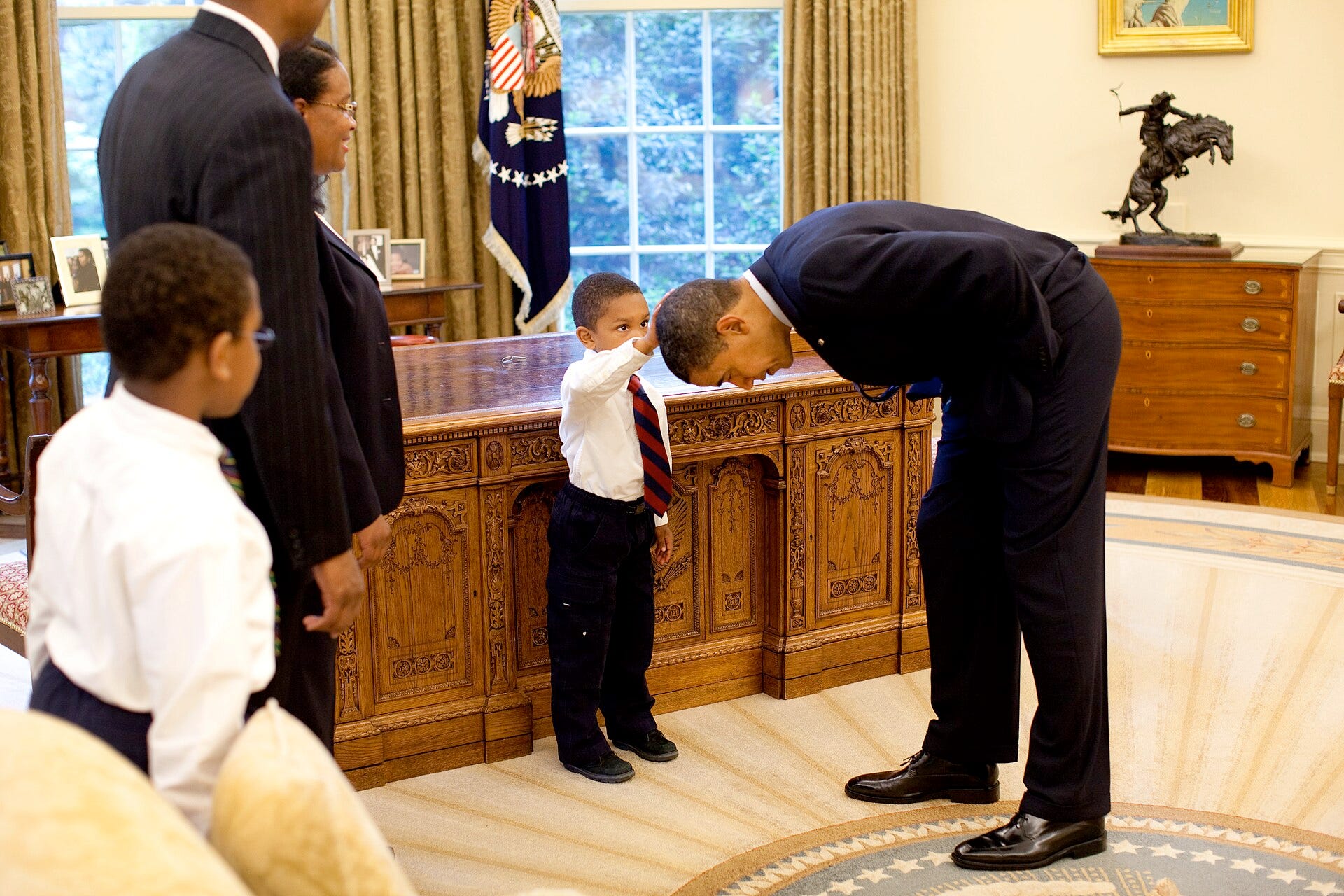

The young boy’s father, Carlton Philadelphia, had worked for the president for two years and was invited to visit the Oval Office with his family for a departure photo. Before they left, Carlton told Obama that each of his sons had a question.
From the New York Times:
“I want to know if my hair is just like yours,” he told Mr. Obama, so quietly that the president asked him to speak again.
Jacob did, and Mr. Obama replied, “Why don’t you touch it and see for yourself?” He lowered his head, level with Jacob, who hesitated.
“Touch it, dude!” Mr. Obama said.
As Jacob patted the presidential crown, Mr. Souza snapped.
“So, what do you think?” Mr. Obama asked.
“Yes, it does feel the same,” Jacob said.
But my favorite part of the story is what Jacob’s brother, Isaac, asked Obama. From Wikipedia’s editors: he “asked Obama about the cancellation of production of the F-22 Raptor fighter jet and was told that it was financially unviable.” (Isaac was eight years old.)
And that’s it for this week! Let me just say that of all the posts I’ve ever written, this was probably the most fun to put together. Taking a visual journey through history, seeing where we’ve been, envisioning where we might go next – simply, what a joy.
Oftentimes, I feel like we move through life without a present awareness of the crucial moment in history we are living through. But you know what? Things are totally nuts right now. I don’t know if you guys have noticed? But it’s pretty bananas out there.
And what’s more, is we all play a part in what happens next. The next chapter of our existence is not written yet. You are one of the many billions of editors who get to shape our story. The most important photo of the 21st century has yet to be taken. For all we know, it could be taken tomorrow. Maybe you will take it? (Probably not, but maybe!)
The human story is newly unfolding with each passing second, and you are a character in it! Go out and play your part. As always, thanks for reading, much love, until next time :)
If you enjoyed this piece, consider tossing me a few bucks (I will spend it on snacks)
“To create his photograph, Niépce treated a heated pewter plate with bitumen of Judea, or Syrian asphalt, a naturally occurring asphalt with light-sensitive properties. The plate was placed in a camera obscura facing out his second-story window. Niépce kept the camera open for at least eight hours, and possibly as long as two days. The bitumen hardened where the light was strongest, creating an image of the streetscape that only became visible once the unhardened parts of asphalt were removed.” (source)
I have a teenage son and his entire phone album is about 1,000 photos of our cat
The hug 😭😭😭😭