

Replacing the global monetary system with corn
A better world is possible

Do you love PBR? Oh sorry, not the beer - I’m talking about precariously balanced rocks.
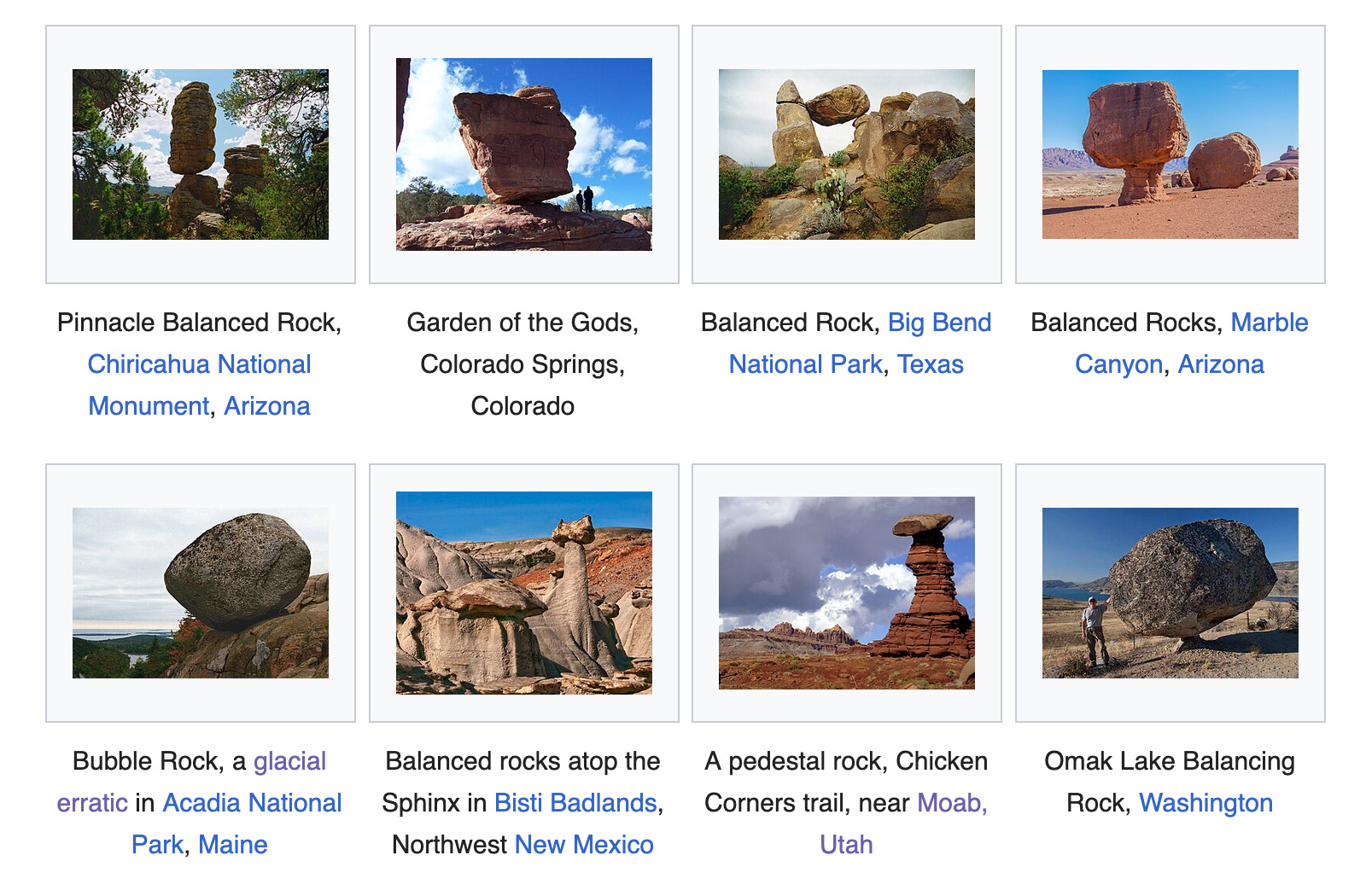
Earth is a big place with lots of rocks, and so many of them are precariously balanced that there’s an entire Wikipedia page about them.
Among the most famous of these PBRs are the balancing rocks of Zimbabwe, which are so popular that they appear on the southeast African nation’s banknotes. Here are the balancing rocks on the Zimbabwean 100 trillion dollar note:
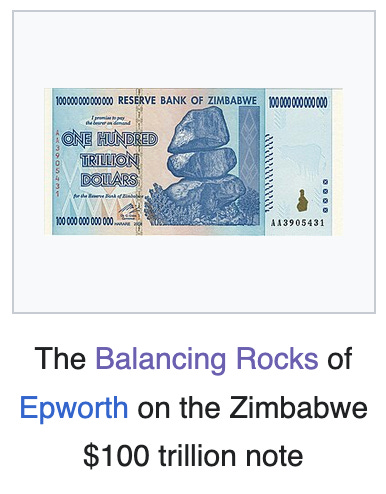
You might be thinking to yourself, “Hey, 100 trillion? That’s a big number.” And you would be correct. One hundred trillion is, in fact, a big number (I took one math class in college so I know about this kind of stuff).
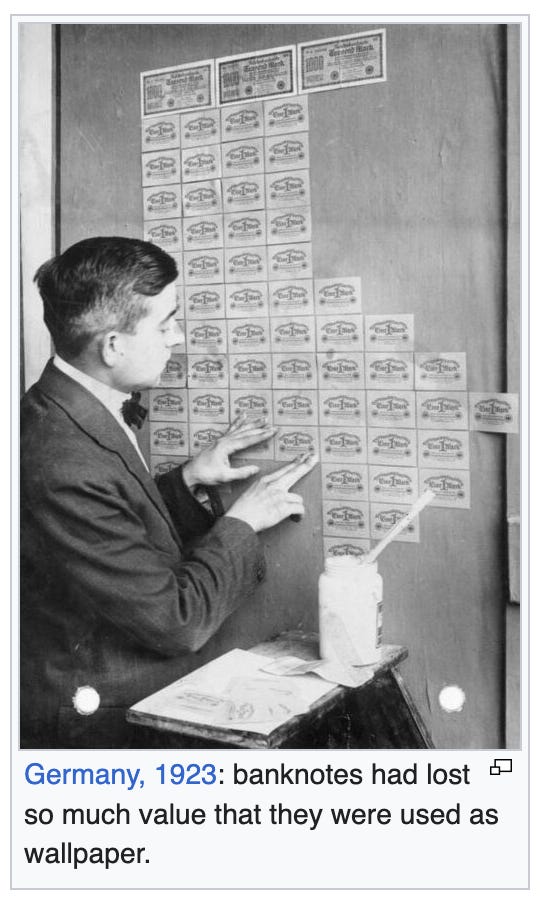
Zimbabwe’s 100 trillion (100,000,000,000,000) note was one of the highest denomination banknotes ever issued and was printed at a time of hyperinflation in the country. And while they were almost worthless while still in regular circulation, they can go for hundreds or even thousands of U.S. dollars today as a collector’s item.
The largest denomination banknote ever issued was the 100 quintillion (100,000,000,000,000,000,000) Hungarian pengő. (They also printed a 1 sextillion pengő, worth 10 times as much, but never put it into circulation.)
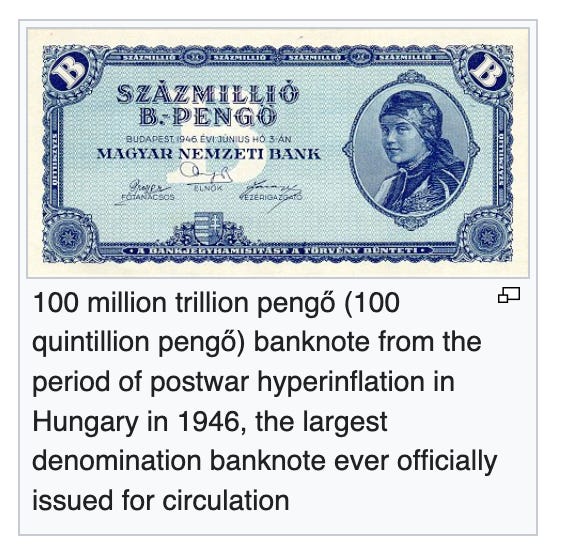
The 100 quintillion notes, which I am officially dubbing Big Pengős, didn’t list out all the zeroes but instead spelled out the full amount, making the Zimbabwean 100,000,000,000,000 banknotes the note with the greatest number of zeroes listed.
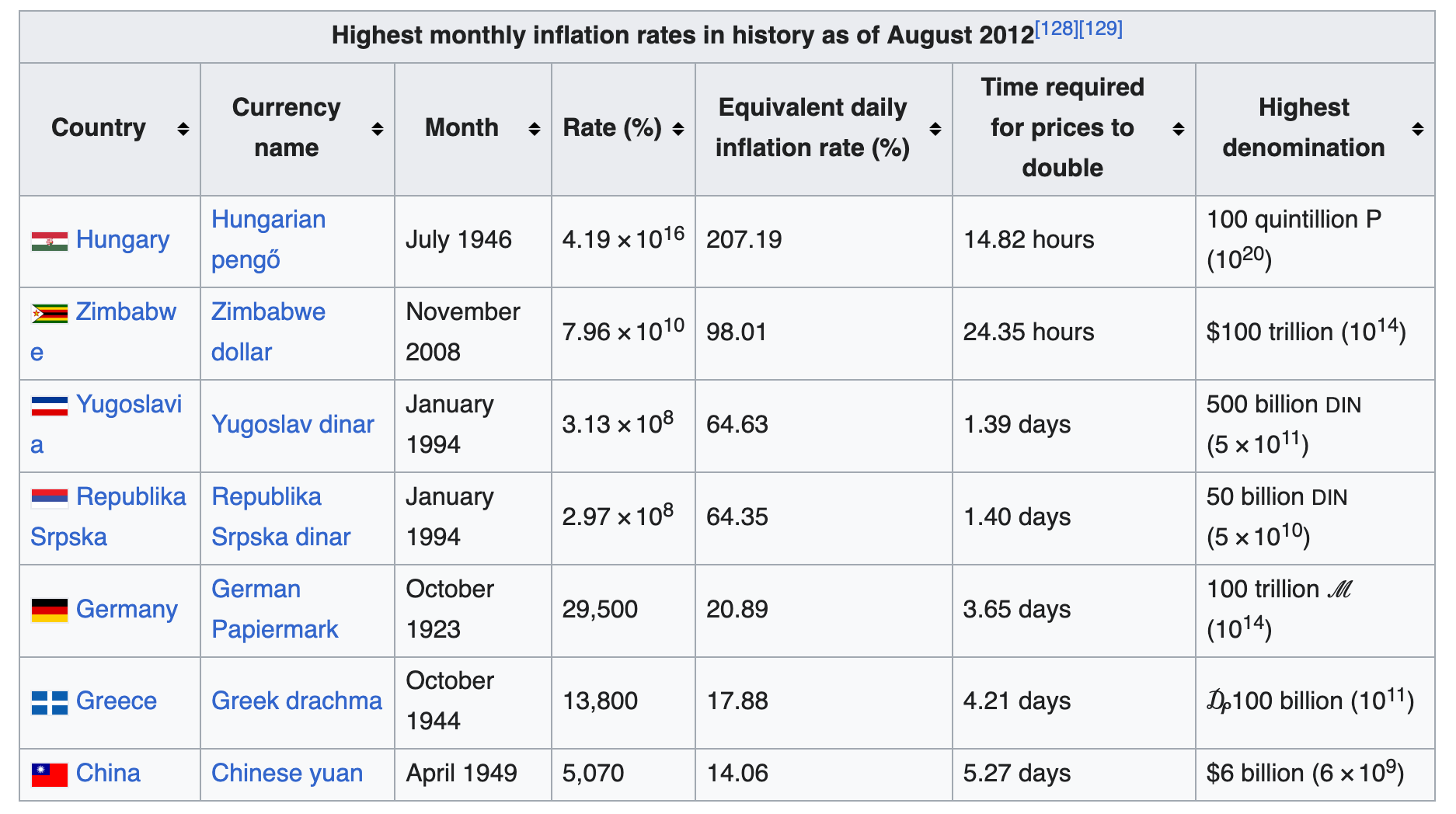
But even though they were too chicken to list all the zeroes, hyperinflation was still a huge problem for the Hungarians. In fact, the record for the most extreme monthly inflation rate in history belongs to Hungary – in July 1946, the inflation rate was 41.9 quadrillion percent (41,900,000,000,000,000%). In other words, prices doubled every 15.3 hours.
Wikipedia has a very handy chart for all the worst periods of hyperinflation in world history:
If you’re looking to escape the nasty effects of hyperinflation, you might consider starting your own currency instead. This idea has actually been very common throughout history, and Wikipedia has a great rundown on local currencies.
Local currencies are pretty much exactly what they sound like – units of currency that can only be spent within certain geographical boundaries. Notable examples include the Ithaca HOUR or BerkShares. There’s also a great list of local currencies in the U.S. if you’re curious whether your community has ever explored this idea.
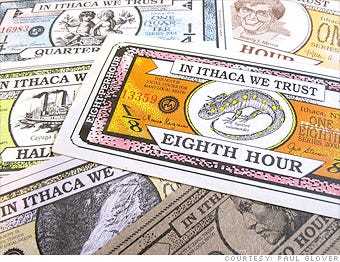


The idea behind local currencies is that they keep money within the local community and with local merchants.
If someone in Ithaca is paid with Ithaca HOURs, they have to keep that money in Ithaca, and only in the pockets of local businesses with an investment in the community. Walmart isn’t going to accept their Ithaca HOURs, but a local grocer will. And they can’t take it to Syracuse or Rochester or anywhere else - the value produced in the community stays in the community.
When it comes to revolutionary ideas about community capital, few were more pioneering than Josiah Warren. In 1827, he opened the Cincinnati Time Store, an experimental retail store founded on Warren’s theory that “the value of a commodity is the amount of labor that goes into producing or acquiring it,” and that it was unethical to charge any more for a product than was required to produce it in the first place.
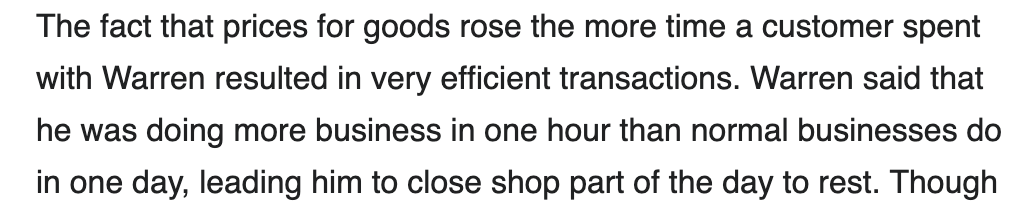
Products in the Cincinnati Time Store were sold at-cost, with the price steadily increasing with the amount of time that a customer spent with the shopkeeper.
Warren literally kept a timer dial in the store to measure how long a customer took to make their purchases, which I find hilarious. If you are an indecisive shopper and you take forever to pick out the items you want to buy, it is going to cost you. As it should be.
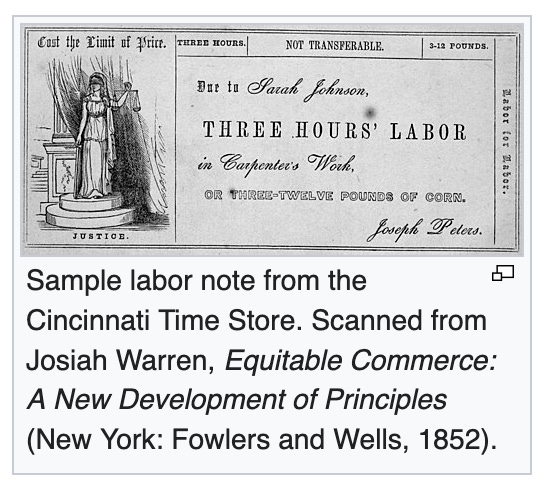
Additionally, instead of paying for goods with money, customers paid with an agreement to perform labor in the future.
Rather than U.S. dollars, they would hand over a labor note, reading something like, “Due to Sarah Johnson, three hours labor in Carpenter’s Work, or three-twelve pounds of corn.” (At the Time Store, twelve pounds of corn was always exchangeable for one hour of labor, making this perhaps the only currency in human history that was directly tied to the value of corn.)

Though the Cincinnati Time Store got off to a slow start, it eventually became ”the most popular mercantile institution in the city.” It had a successful three-year run before Warren decided to close it in 1830, sufficiently pleased he’d shown everyone that you can engage in commerce without the “erection of any power over the individual.”
In honor of Josiah Warren and his groundbreaking Cincinnati Time Store, I am excited to announce today that I am now accepting manual labor and/or sacks of corn as forms of payment for premium subscriptions to Rabbit Cavern. Please contact me to coordinate corn shipments.
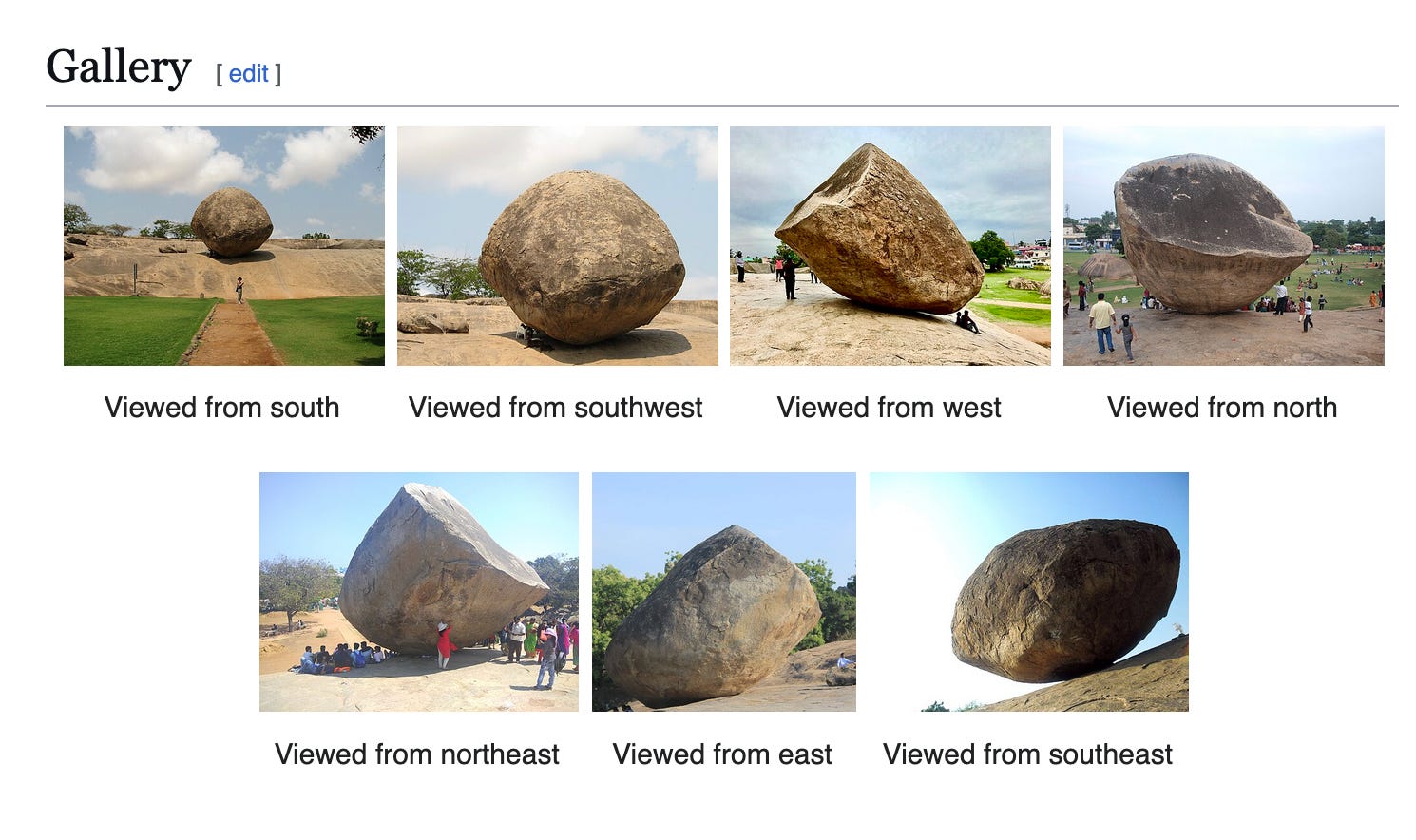
We’ll close today’s post by going back to where we started - the treasured PBR. Another famous PBR is Krishna’s Butterball, located in Mamallapuram, Tamil Nadu, India.


I’ll let you explore that Wikipedia page on your own if you’re curious, but I’d be remiss if I didn’t address the one question that I know is on all of your minds: What’s the story behind the name? Can I please see images of Krishna’s Butterball from every possible angle?
Don’t worry, Wikipedia has you covered.
As always, thanks for reading, hope you’re all enjoying your summer, and I’ll see you next time!
If you enjoyed this piece, consider tossing me a few bucks (I will spend it on snacks)
Field corn or sweet corn?